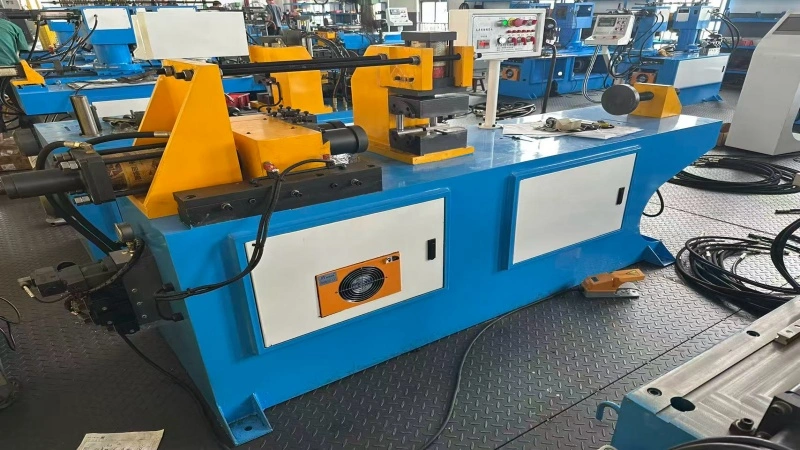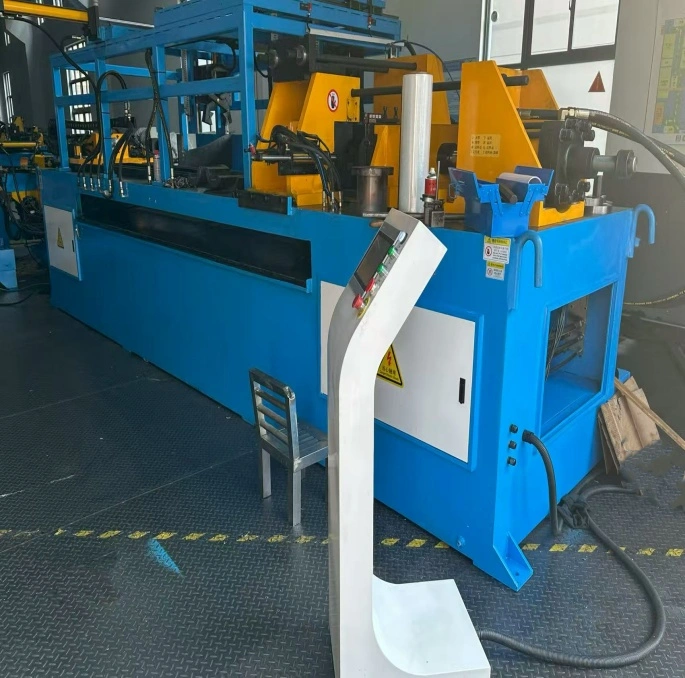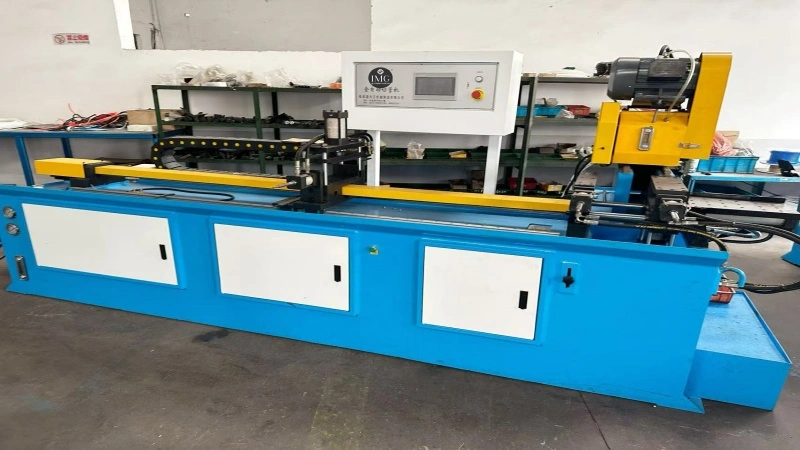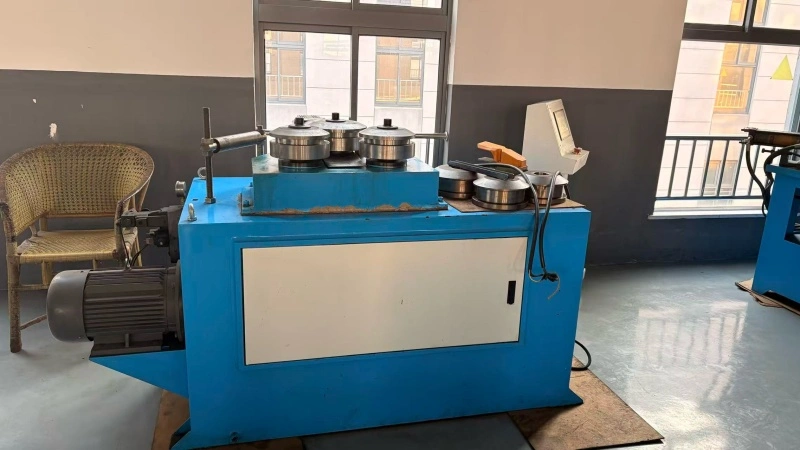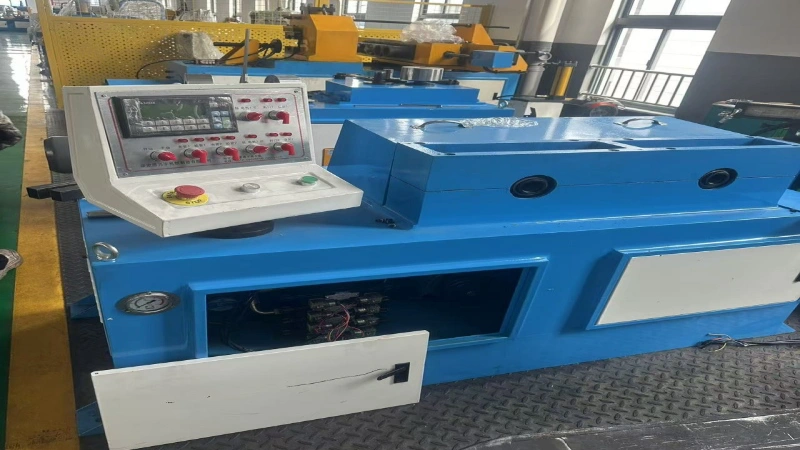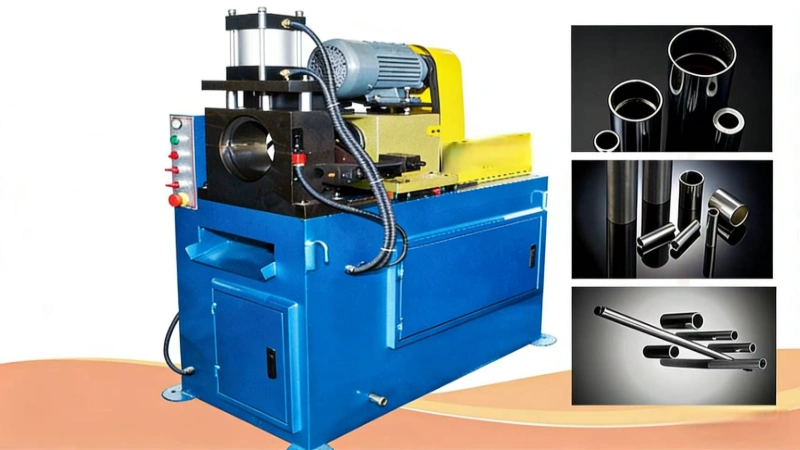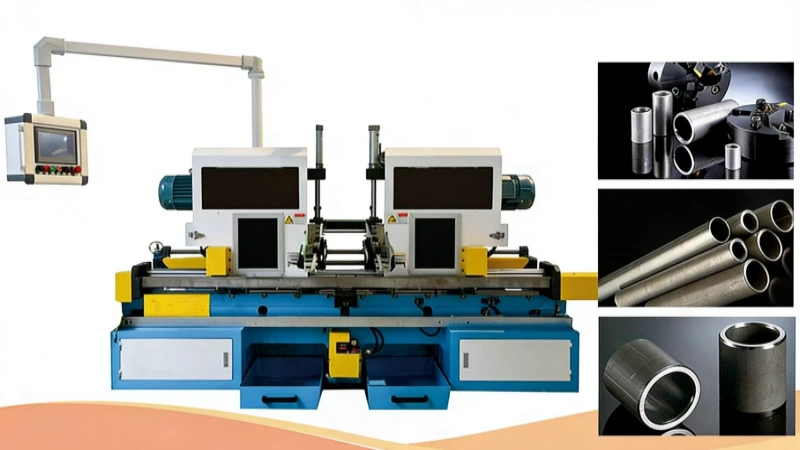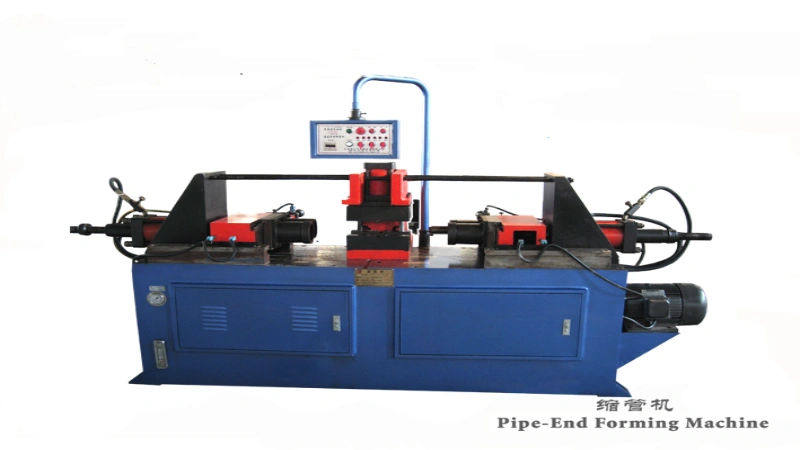
Pipe Ends Forming Machine
The Ultimate Guide to the End Forming Machine: Precision, Efficiency, and Industrial Applications
In the modern landscape of metal fabrication, the connection point is often the most critical part of any assembly. Whether it is the exhaust system of a high-performance vehicle, the complex framework of aerospace hydraulics, or the structural integrity of steel furniture, the way a tube terminates defines its function. This is where the end forming machine becomes the cornerstone of manufacturing excellence.
As industries demand tighter tolerances and faster cycle times, understanding the nuances of pipe and tube manipulation is no longer optional—it is a competitive necessity. This comprehensive guide explores the mechanics, applications, and selection criteria for high-quality end forming equipment, demonstrating why investing in the right technology is pivotal for your production line.
1. Unveiling the Mechanics: What is an End Forming Machine?
At its core, an end forming machine is a specialized piece of industrial equipment designed to modify the shape of the end of a tube or pipe. Unlike bending, which alters the trajectory of the tubing, end forming alters the cross-sectional geometry or the diameter of the tube’s tip. This process allows tubes to fit into one another, accommodate seals, hold hoses, or mount to other components.
The process is generally a cold-forming operation, meaning the metal is shaped below its recrystallization temperature. This preserves the material's mechanical properties and often hardens the surface, making the formed end stronger than the original raw material. The machinery utilizes hydraulic, pneumatic, or electric servo-driven power to force the tube into a die or to force a tool into the tube.
The Evolution of the Technology
Historically, end forming was a manual, labor-intensive process involving heat and hammers. Today, a modern pipe end forming machine utilizes sophisticated logic controllers (PLCs) and precise tooling to execute complex shapes in seconds.
The rigidity of the machine base is paramount. A high-quality machine from a reputable manufacturer (like those featured on TubingMachinery.com) is built with a heavy steel frame to absorb the immense forces generated during the expansion or reduction processes. Without this rigidity, vibrations would lead to inconsistent tooling alignment, resulting in ovality issues or out-of-tolerance parts. Furthermore, modern advancements have introduced CNC (Computer Numerical Control) variations, allowing for multi-station forming where a tube moves automatically between different dies to achieve a complex final shape without operator intervention.
2. Core Processes: The Versatility of the Tube Endforming Machine
When we discuss a tube endforming machine, we are not referring to a single function. These machines are the "Swiss Army Knives" of the tubing industry. The versatility of the equipment depends largely on the tooling setup and the method of force application. Understanding these specific processes is essential for engineers and procurement managers to determine the right machine for their specific blueprints.
Expanding and Reducing
The most fundamental operations are expanding (sizing up) and reducing (sizing down).
Expansion: This is typically achieved using segmented fingers that insert into the tube and expand outward, or a solid tapered tool forced into the ID (Inner Diameter). This is crucial for "slip-fit" joints where one pipe must slide perfectly over another.
Reduction: This involves forcing the tube into a tapered die to compress the OD (Outer Diameter). It is frequently used to cap tubes or prepare them for threading.
Beading and Flaring
Beading: A bead is a raised ridge around the circumference of the tube. In automotive and HVAC industries, beading is vital for hose retention. The bead acts as a barb that prevents a flexible hose from slipping off under pressure when clamped.
Flaring: Flaring spreads the end of the tube outward to form a funnel or flat face. This is standard in high-pressure hydraulic connections (like SAE or JIC flares) where a nut compresses the flared metal against a fitting to create a leak-proof seal without gaskets.
Thickening and Upsetting
For applications requiring high structural strength, an end forming machine can perform "upsetting," where the wall thickness of the tube end is increased by compressing the material longitudinally. This is common in the oil and gas sector where pipe ends must be threaded but cannot lose wall strength at the root of the thread.
3. Types of Machinery: Ram, Segmented, and Rotary
Not all machines operate on the same principle. To demonstrate true expertise (the "E" in E-E-A-T), one must distinguish between the different mechanical approaches used in pipe end forming machines.
Ram Forming Machines (Linear)
Ram formers are the heavy lifters of the industry. They use a linear hydraulic cylinder to push a tool directly into or over the clamped tube.
Pros: Exceptional for heavy-wall pipes and deep reductions. They are robust, simple to maintain, and generate immense force.
Cons: Limited to symmetrical shapes generally. If you need a complex bead profile, a simple ram might not suffice unless equipped with multi-step tooling.
Segmented I/O Machines
These machines use expanding or contracting fingers (segment sets).
Mechanism: To expand, a tapered arbor is pulled back through a set of fingers, forcing them outward against the tube ID. To reduce, the fingers squeeze the OD.
Precision: These are the standard for sizing tubes to exact tolerances. Because the tooling is segmented, there can be tiny witness marks on the tube, which is a consideration for cosmetic parts.
Rotary and Spin Forming
For a tube endforming machine dealing with cosmetic parts or complex geometries, spin forming is superior. The tool rotates at high speed while the tube remains stationary (or vice versa). Friction heats the metal locally, making it pliable.
Applications: Perfect for closing the end of a tube completely (doming) or creating very sharp, polished beads without the witness marks associated with segmented tooling.
4. Materials Matter: Compatibility and Tooling Life
The effectiveness of an end forming machine is inextricably linked to the material being processed. A machine setup that works flawlessly for aluminum might fail catastrophically with stainless steel if the operator does not understand material science.
Stainless Steel vs. Mild Steel
Stainless steel (especially 304 and 316 grades) has a high work-hardening rate. As you form it, it becomes harder. This requires machines with higher rigidity and hydraulic power. Furthermore, the tooling for stainless steel usually requires advanced coatings (like TiN or TICN) to prevent "galling"—a phenomenon where the material adheres to the tool, ruining the surface finish.
Non-Ferrous Metals (Copper and Aluminum)
Copper is soft and ductile, making it easy to form. However, because it is so soft, it is prone to collapsing or buckling if not supported correctly. A high-quality pipe end forming machine will feature adjustable clamping pressure. If the clamp is too tight, it deforms the copper; too loose, and the tube slips. Precision pressure regulation is a hallmark of professional-grade machinery.
Exotic Alloys
In aerospace, materials like Titanium and Inconel are common. These require precise speed control. Forming these materials too quickly can cause cracking. Advanced servo-electric end formers are often preferred here because they offer programmable control over the stroke speed and force curves, allowing engineers to "feather" the material into shape.
5. Industrial Applications: Where Accuracy Meets Safety
The demand for the end forming machine is driven by specific industry standards that refuse to compromise on safety and reliability.
The Automotive Sector
The exhaust system is the most visible application. Pipes must be expanded to fit into mufflers and catalytic converters. However, beyond exhaust, end forming is used in fuel lines, power steering tubes, and headrest frames. In electric vehicles (EVs), battery cooling lines require intricate end forms to ensure coolant does not leak onto high-voltage components. The precision of the forming machine directly correlates to the safety of the vehicle.
HVAC and Refrigeration
In air conditioning systems, copper tubes are brazed together. To make a braze joint, one tube must be expanded to create a capillary gap for the silver solder to flow into. An inaccurate expansion results in a "starved joint" and eventual refrigerant leaks. Therefore, HVAC manufacturers rely on high-speed tube endforming machines that can cycle in under 2 seconds while maintaining tolerances of +/- 0.05mm.
Furniture and Construction
Scaffolding requires swaged ends to stack vertically. Steel furniture (chairs, tables) uses end forming for aesthetic tapering and to allow legs to fit into bases. Here, the cosmetic finish is key. The machine must form the tube without scratching the chrome or powder-coated surface, requiring specialized polymer clamps or polished steel dies.
6. Selecting the Right Machine for Your Production Line
Choosing a pipe end forming machine is a significant capital investment. Decision-makers must evaluate several factors to ensure ROI (Return on Investment).
-
Tube Specifications
What is the Maximum OD and Wall Thickness? A machine rated for 2-inch tubing may physically fit a 2.5-inch tube, but it will lack the clamping force to hold it during forming. Always size the machine with a 20% safety margin regarding capacity.
-
Production Volume
For high-volume production (e.g., 5,000 parts per day), a CNC multi-stack machine with an auto-loader is essential. For a job shop doing custom work (50 parts per day), a manual-load, single-station hydraulic machine offers better versatility and faster changeover times.
-
Tooling Changeover
In modern "Just-in-Time" manufacturing, you might run 1-inch pipes in the morning and 2-inch pipes in the afternoon. Look for machines that offer "Quick Change" tooling systems. Top-tier machines allow tool changes in under 5 minutes without the need for hand tools.
-
Power Source
Hydraulic: Industry standard, powerful, cheaper. Requires oil maintenance.
Electric (Servo): Cleaner, quieter, more energy-efficient, and higher precision. More expensive upfront but lower operating costs.
7. Maintenance and Troubleshooting for Longevity
To maintain the "Trustworthiness" of your production line, maintenance of the tube endforming machine cannot be overlooked. A well-maintained machine can last for decades.
Hydraulic Health
For hydraulic units, oil cleanliness is paramount. Contaminated oil causes valve stiction and seal failure. Regular filter changes and monitoring oil temperature are critical. If the oil gets too hot, the machine loses pressure, resulting in incomplete forms.
Tooling Lubrication
Never run metal-on-metal without lubrication. Specialized forming lubricants (often distinct from cutting fluids) should be applied to the tube end. This reduces friction, lowers the tonnage required to form the part, and drastically extends the life of the expansion fingers and clamp dies.
Alignment Checks
Over time, the centerline of the punch can drift relative to the clamp dies due to wear. Regular alignment checks ensure concentricity. If a pipe is expanded off-center, one side of the wall becomes dangerously thin, leading to potential failure in the field.
8. Product Spotlight and Specifications
At Tubing Machinery, we understand that every production floor has unique needs. Below is a breakdown of our flagship end forming solutions designed to meet diverse industrial requirements.
| Brand | Product Series | Key Features | Typical Price Range* |
| TubingMachinery A | TM-40 Hydraulic Series |
• Single Station Linear Forming • Max Capacity: 40mm OD • PLC Control with Touch Screen • Ideal for: Expanding, Reducing, Flaring |
$8,500 - $12,000 (Request Quote) |
| TubingMachinery B | TM-80 Heavy Duty |
• High-Force Clamping System • Max Capacity: 80mm OD • Compatible with Stainless Steel • Quick-Change Tooling System |
$15,000 - $22,000 (Request Quote) |
| TubingMachinery C | CNC-E Multistack |
• All-Electric Servo Driven • Multi-tool stack (up to 3 punches) • 0.01mm Precision Accuracy • Clean operation (No hydraulics) |
$35,000 - $55,000 (Request Quote) |
| TubingMachinery D | Rotary Spin-Form |
• Spinning Head Technology • Perfect for Cosmetic Beading & Closing • Handles thin-wall tubing gently • Variable Speed Control |
$18,000 - $28,000 (Request Quote) |
*Prices are estimated based on standard configurations. Final pricing depends on customization, voltage requirements, and tooling packages.
Conclusion: Elevating Your Manufacturing Capability
The end forming machine is more than just a press; it is the bridge between raw material and a functional product. Whether you are dealing with heavy-duty structural pipes requiring a robust pipe end forming machine, or precision aerospace components needing a delicate tube endforming machine, the technology you choose defines your product quality.
By understanding the mechanics of expanding, reducing, and flaring, and by selecting machinery that aligns with your material and volume needs, you ensure a production line that is efficient, safe, and profitable.
At Tubing Machinery, we are dedicated to providing equipment that meets the rigorous demands of modern industry. We invite you to explore our full range of products and contact our engineering team to discuss how we can customize a solution for your specific forming challenges. Investing in quality end forming today is investing in the reliability of your products tomorrow.