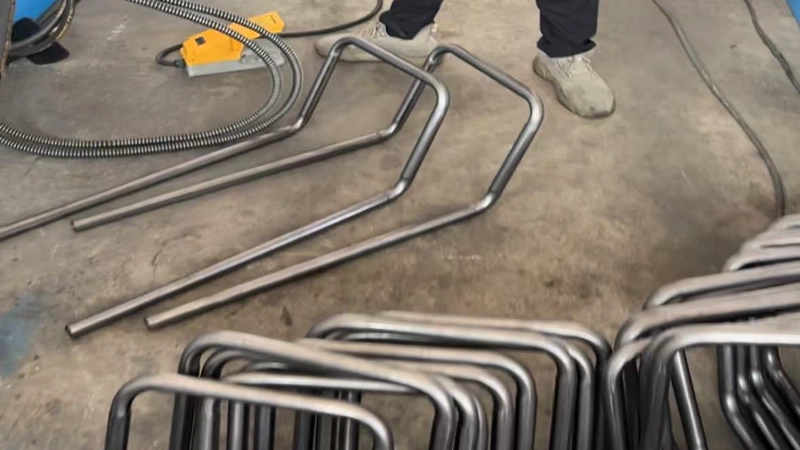
For Automobile Seat Frame Production
Application & Suitability
Q: What kinds of pipes can this machine process for car seats?
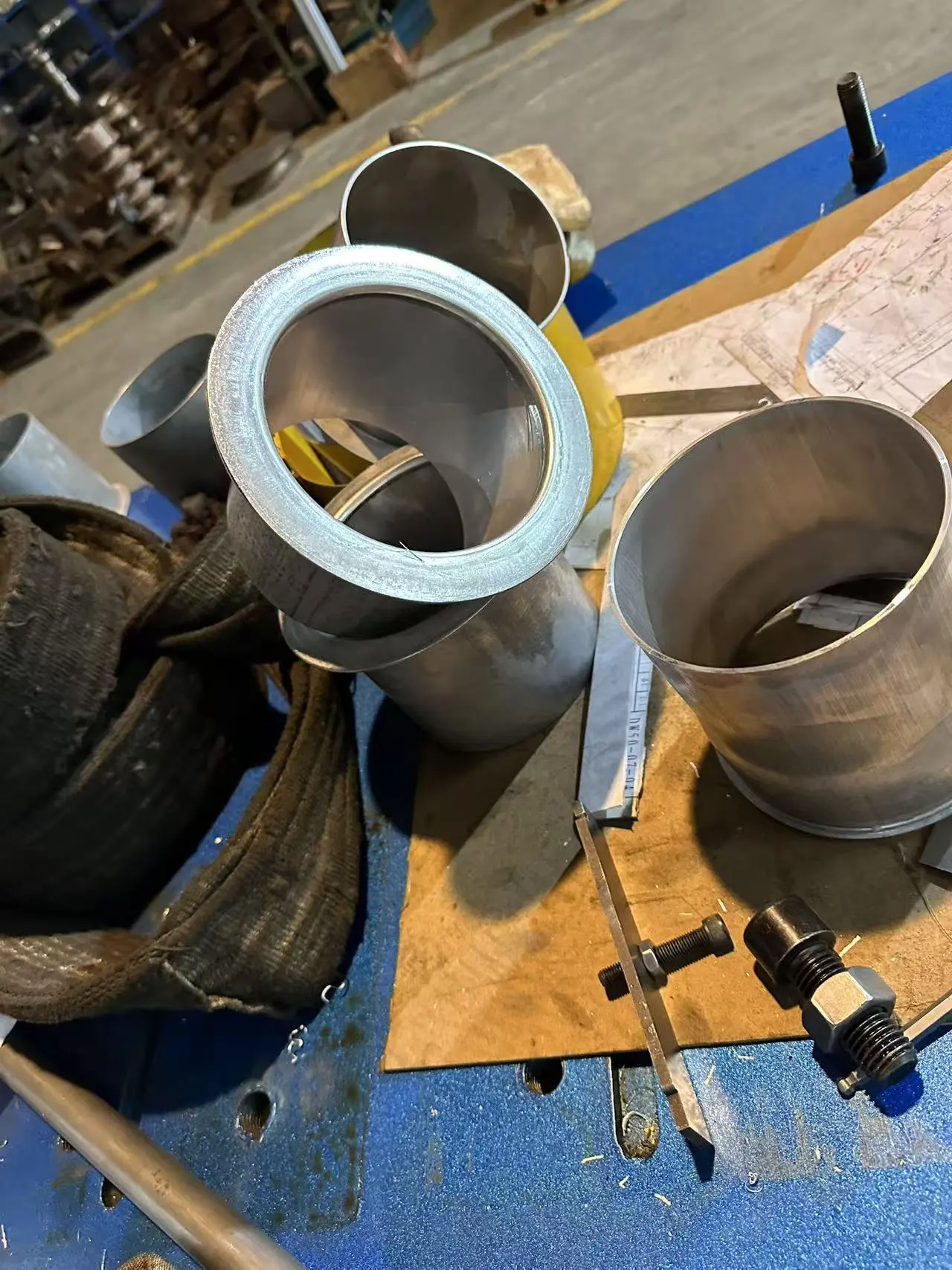
A: It is specially designed for automobile seat frame pipes, including round pipes and oval pipes. Applicable materials: Q195, Q235 and high-strength alloy steel. Common specification: pipe diameter φ10–φ32mm, wall thickness 1.0–3.0mm. It is widely used for symmetrical forming of seat side pipes, backrest pipes and headrest bracket pipes.

Q: What are the advantages of double-head bending over single-head bending for seat parts?
A: Dual-head synchronous bending ensures high symmetry of left and right seat workpieces with a symmetry error within ±0.15mm. It eliminates secondary clamping and flipping procedures, improves production efficiency by about 40%, and perfectly matches mass production of automotive seat assembly lines.
Q: Can one machine produce multiple car seat models?
A: Yes. The system supports storing 99 sets of bending programs. Model replacement can be completed within 5–10 minutes by simply changing the mould and recalling the program, suitable for mixed production of passenger cars and new energy vehicle seats.

Processing Precision & Quality
Q: How to solve uneven size and poor symmetry of bent seat pipes?
A: The main causes include unsynchronized dual-head operation, worn moulds/clamps and uneven pipe material. Solutions: recalibrate servo synchronization, replace worn fixtures, sort raw materials uniformly and adjust bending compensation parameters
Q: How to avoid pipe wrinkling and collapse after bending?
A: Equip with floating core rod for internal pipe support, install anti-wrinkle moulds, adopt low-speed uniform bending, and adjust pressing wheel pressure. Professional bending lubricant can effectively reduce tube wall deformation.
Q: How to control bending rebound and ensure batch consistency?
A: The servo system has built-in rebound compensation. Operators can set parameters according to pipe material and specifications, and confirm and lock parameters through first-piece trial production. The repeated angle precision can reach ±0.3°.
Automation & Line Connection
Can the machine connect with automatic production lines?
A: It supports full-line automatic matching, connecting with pipe cutting machines, chamfering machines and welding stations to form an integrated production line. Equipped with Ethernet and RS485 communication interfaces, it can be connected to MES system for automatic production data statistics.
Q: Is fully automatic feeding available?
A: Both semi-automatic (manual feeding) and full-automatic (automatic rack feeding) models are optional. The automatic model realizes automatic pipe sorting and fixed-length feeding, with one operator able to manage 2–3 devices, greatly saving labor costs.
4. Common Faults & Solutions
Q: Dual-head out-of-sync or single head no movement
A: Check servo cable and encoder connection, perform origin reset for dual shafts, inspect solenoid valve and oil pressure (hydraulic model), and restart the system to restore synchronous parameters.
Q: Pipe slipping caused by insufficient clamping force
A: Clean oil sludge and iron scraps on fixtures, replace worn clamping blocks, and appropriately increase hydraulic pressure or servo clamping torque parameters.
Q: Frequent hydraulic system alarms
A: Check hydraulic oil level and oil quality, replace blocked filter elements, clean heat dissipation equipment, and replace aging seals regularly.
5. Model Selection & After-sales Service
Q: Electric model vs hydraulic model, how to choose?
A: Full servo electric model: low noise, no oil pollution, higher precision and energy saving, suitable for high-end new energy vehicle seat production and clean workshops.Hydraulic model: high output force and cost-effective, ideal for mass processing of thick-walled seat pipes.
Q: About delivery, installation and warranty
A: Standard delivery cycle: 7–15 working days. Free on-site installation, commissioning, program debugging and operator training are provided. The whole machine enjoys 12-month warranty and lifelong technical support. Non-standard customized services (extended travel, special bending dies) are supported.
6. Daily Maintenance
Daily: clean iron scraps and lubricate guide rails;
Weekly: fasten screws and check pipeline leakage;
Monthly: calibrate dual-head synchronization precision;
Regularly: replace hydraulic oil and wearing mould accessories