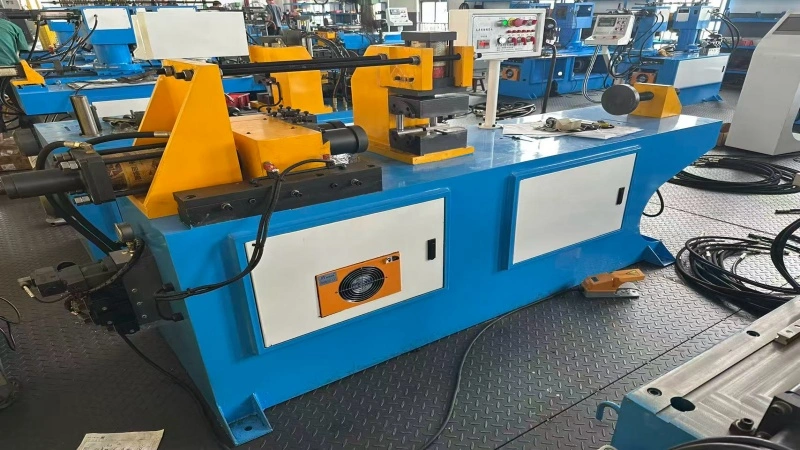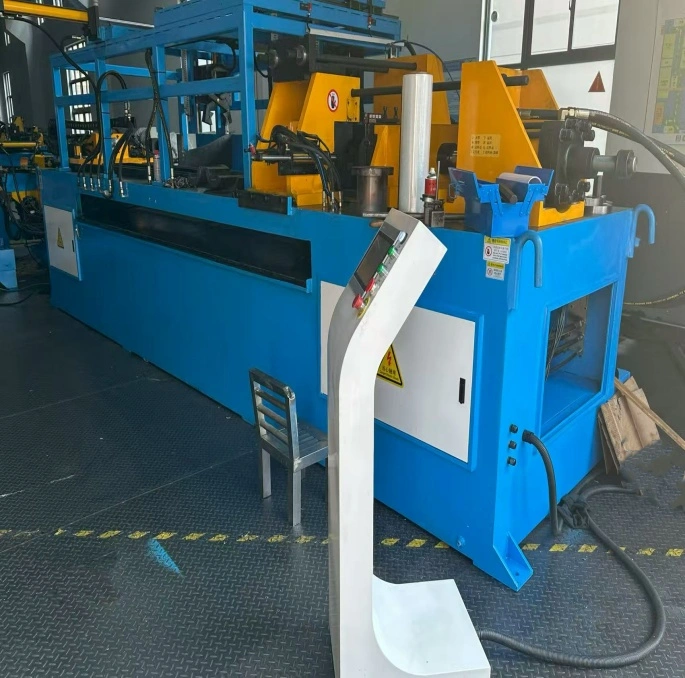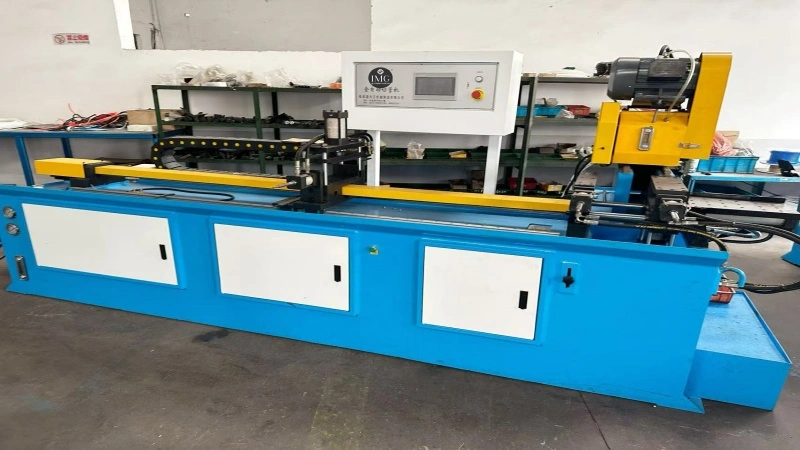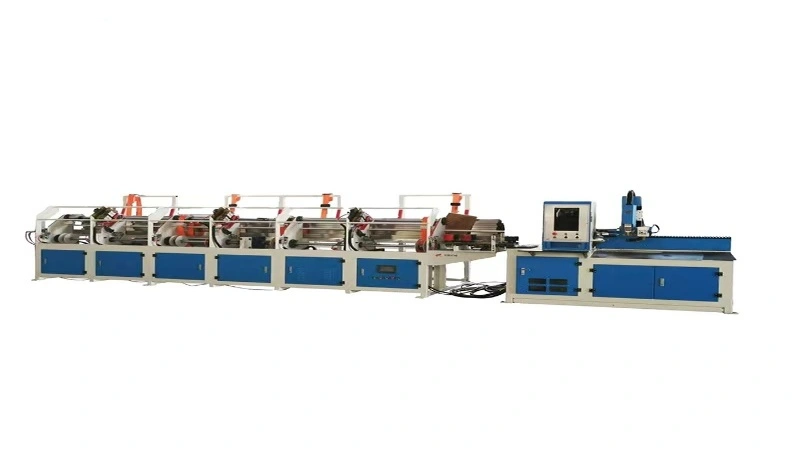
Laser Cutting Machine
The Industrial Revolution of Tube Processing: Unlocking Efficiency with Advanced Laser Cutting Technology
In the landscape of modern manufacturing, the demand for speed, accuracy, and geometric complexity has never been higher. For decades, the fabrication of metal tubes and pipes relied on a disjointed series of manual processes—sawing, drilling, punching, and deburring. Today, a single piece of equipment has fundamentally altered this workflow: the laser cutting machine.
As industries ranging from automotive manufacturing to architectural construction seek to reduce overhead and improve product quality, the shift toward automated laser solutions is no longer a luxury; it is a necessity. This comprehensive guide explores the engineering marvels behind these machines, specifically focusing on how the integration of CNC technology and high-precision optics is redefining what is possible in metal tube fabrication.
The Evolution of Metal Fabrication: Enter the Laser Cutting Machine
The history of metal cutting is a timeline of seeking "the cleaner cut." Traditional mechanical cutting methods, such as band saws or abrasive wheels, inevitably generate heat and mechanical stress. This results in deformation of the tube and leaves behind sharp burrs that require secondary finishing operations. This traditional workflow creates a bottleneck, increasing labor costs and production time.
The introduction of the laser cutting machine into the tubing industry marked a paradigm shift. Unlike mechanical tools, a laser does not exert physical force on the workpiece. It utilizes a focused beam of light—typically generated by a fiber source in modern iterations—to melt and vaporize the material. An assist gas (such as oxygen or nitrogen) is then used to blow the molten material away, leaving a pristine edge.
However, the true power of this technology lies in its versatility. A laser cutter is not just a saw; it is a drill, a milling machine, and an engraver all wrapped into one unit. For Tubing Machinery, this means a raw metal tube can enter the machine and exit as a fully finished component, ready for assembly or welding, in a single continuous cycle. This consolidation of steps is the cornerstone of modern lean manufacturing.
Understanding the CNC Laser Tube Cutting Machine
To fully appreciate the capabilities of modern equipment, one must look at the "brain" behind the laser: Computer Numerical Control (CNC). A cnc laser tube cutting machine represents the synergy between software intelligence and hardware power.
In a manual or semi-automatic setup, an operator might set a stop for length, cut the tube, move it to a drill press, measure the hole location, and drill. Human error is introduced at every step. In contrast, a CNC system reads a 3D CAD design file. The software automatically calculates the most efficient cutting path, controls the rotation of the tube (the B-axis), and manages the focal height of the laser head (the Z-axis) in real-time.
The Role of Intelligent Nesting
One of the most critical aspects of a CNC-driven system is "nesting." When cutting multiple parts from a standard 6-meter or 12-meter metal tube, a cnc laser tube cutting machine utilizes sophisticated algorithms to arrange the parts in a way that maximizes material usage. It can rotate parts, share cut lines (common-line cutting), and navigate around potential defects. This capability significantly reduces scrap metal waste—a major cost factor in stainless steel and aluminum processing.
Furthermore, the CNC system manages complex geometries that are impossible with traditional tools. Whether it is cutting a fish-mouth joint for a precise weld fit-up or creating intricate slotting for architectural designs, the CNC controller ensures the laser follows the exact trajectory required, coordinating the chuck rotation with the linear movement of the cutting head.
The Engineering Behind the High Precision Laser Tube Cutting Machine
In industries like aerospace, medical device manufacturing, and high-end furniture production, "close enough" is not acceptable. This is where the high precision laser tube cutting machine distinguishes itself from standard entry-level models. Precision in tube cutting is more challenging than flat sheet cutting because tubes are rarely perfectly straight or perfectly round.
Overcoming Material Imperfections
Raw tubes often suffer from bowing, twisting, or ovality (where the cross-section is egg-shaped rather than circular). If a machine treats a distinct tube as a perfect cylinder, features like holes or slots will be cut off-center.
A high precision laser tube cutting machine employs advanced sensing technology. Capacitive sensors in the laser head measure the distance to the material surface thousands of times per second, adjusting the focal point dynamically. More importantly, high-end machines feature automatic centering and clamping systems. These pneumatic chucks utilize variable pressure to hold the tube firmly without crushing thin-walled materials, while the software compensates for any detected bow or twist in the tube, shifting the cut path to match the actual reality of the material, not just the theoretical CAD model.
Micro-Joints and Tolerance Control
Achieving tolerances within ±0.05mm requires rigid machine construction. The machine bed must be thermally annealed to prevent deformation over time. The drive systems typically use high-inertia servo motors and precision rack-and-pinion gears. This mechanical stability allows the high precision laser tube cutting machine to perform delicate tasks, such as leaving tiny "micro-joints" that hold a part in place until the operator is ready to unload it, or cutting extremely small diameter holes relative to the material thickness.
Fiber Laser vs. CO2: The Source of Power
When discussing a laser cutting machine for tubing, the light source is the engine of productivity. Historically, CO2 lasers were the industry standard. However, the last decade has seen the dominance of Fiber Laser technology.
Fiber lasers generate the beam inside an active optical fiber and transmit it to the cutting head without mirrors or complex optical paths. This results in several distinct advantages for tube cutting:
- Wavelength Absorption: Fiber lasers operate at a wavelength of approximately 1.07 microns, which is absorbed far more efficiently by metals than the 10.6-micron wavelength of CO2 lasers. This allows fiber lasers to cut reflective materials like copper, brass, and aluminum with ease.
- Energy Efficiency: A fiber laser is roughly 300% more energy-efficient than a CO2 resonator. For a factory running 24/7, this translates to massive savings on electricity bills.
- Maintenance: Fiber lasers are solid-state devices. They do not require turbine maintenance, mirror realignments, or laser gases, significantly increasing machine uptime.
For Tubing Machinery, equipping a cnc laser tube cutting machine with a fiber source (ranging from 1kW to 6kW or more) ensures that the machine can handle everything from delicate thin-walled stainless steel for medical use to thick carbon steel for structural applications.
Critical Features of Modern Tube Cutting Systems
When investing in a laser cutting machine, the specifications sheet can be overwhelming. However, certain features dictate the operational efficiency and versatility of the equipment.
Automatic Loading and Unloading Systems
Labor costs are often the highest expense in fabrication. A standalone machine requires an operator to manually lift heavy bundles of tubes, feed them one by one, and unload the finished parts. Modern systems integrate automatic bundle loaders. These systems can hold tons of raw material, separate individual tubes, measure their length, and feed them into the chucks automatically. This allows for "lights-out" manufacturing, where the machine continues to produce parts during breaks or overnight shifts.
3D Cutting Heads (Beveling)
Standard cutting is performed perpendicular to the surface (2D cutting). However, many welding applications require a beveled edge to create a V-groove for deeper weld penetration. Advanced high precision laser tube cutting machine models come equipped with 5-axis or 3D cutting heads. These heads can tilt up to 45 degrees, creating chamfers and countersinks directly during the cutting process, eliminating the need for manual grinding later.
Universal Chucks
The versatility of a tube laser is defined by what profiles it can hold. While round, square, and rectangular tubes are standard, modern pneumatic chucks are designed to clamp varying profiles—L-shaped angle iron, C-channels, and special elliptical shapes—without requiring a complete tooling change. This "self-centering" capability is vital for job shops that switch between different product types multiple times a day.
Applications Across Industries
The versatility of the laser cutting machine has cemented its place in diverse sectors.
- Fitness Equipment: The gym industry relies heavily on tubular steel. From treadmills to weight racks, the complex connections between round and oval tubes require precise coping cuts that only a cnc laser tube cutting machine can deliver consistently.
- Automotive Industry: Vehicle chassis, cross-car beams, and exhaust systems utilize high-strength steel tubes. The precision requirements here are stringent for safety. Laser cutting ensures that every hole for sensors or bolts is perfectly aligned.
- Furniture and Architecture: Modern office furniture and architectural railings often feature intricate designs. The laser allows for aesthetic cuts, slotting for invisible joinery, and burr-free finishes that are safe for human touch immediately after cutting.
- Agricultural Machinery: Heavy-duty harvesters and tractors use thick-walled pipes for structural integrity. High-power laser cutters can slice through thick steel quickly, replacing slow band saws and plasma cutters.
Economic Impact: ROI and Cost-Per-Part Analysis
Switching to a laser cutting machine is a significant capital investment, but the Return on Investment (ROI) is typically rapid. The calculation relies on the "Cost-Per-Part" metric.
Traditional processing might involve:
- Sawing (2 minutes + blade cost)
- Drilling (3 minutes + tooling cost)
- Deburring (2 minutes manual labor)
- Total time: 7 minutes per part.
With a cnc laser tube cutting machine, all these features are cut in a single pass.
- Laser Process (45 seconds)
- Total time: 45 seconds per part.
The dramatic reduction in cycle time, combined with the elimination of secondary processes and the reduction of scrap material via CNC nesting, usually results in the machine paying for itself within 12 to 18 months, depending on production volume. Furthermore, the consistency of the high precision laser tube cutting machine reduces quality control rejections, further saving costs.
Selecting the Right Partner: The Tubing Machinery Advantage
Choosing a machine is not just about the hardware; it is about the partnership. Tubing Machinery understands that a laser cutting machine is the heartbeat of your production line.
When evaluating a supplier, consider their expertise in application engineering. Do they understand the specific challenges of cutting highly reflective aluminum versus thick mild steel? Do they offer training on the CNC software to ensure your operators can utilize the full potential of the machine?
Support is equally critical. Laser machines are high-tech devices. Access to spare parts (lenses, nozzles, ceramic rings) and remote diagnostic support ensures that your production never stalls. A reputable supplier provides not just a machine, but a complete production solution tailored to your specific throughput requirements.
Product Overview: TM-Series Laser Tube Cutters
To help you understand the current market offerings tailored to different production needs, we have compiled a breakdown of our flagship laser cutting solutions.
| Product Series | Product Name | Key Features | Target Applications | Price Estimation |
|---|---|---|---|---|
| Tubing Machinery™ | TM-Pro 6000 CNC Fiber Laser |
• 1kW - 3kW IPG/Raycus Source • Full Automatic Bundle Loader • Pneumatic Self-Centering Chucks • Minimal Tail Material (Waste reduction) |
General fabrication, Furniture, Fitness Equipment, Handrails | Contact for Quote (Configurable) |
| Tubing Machinery™ | TM-Ultra Precision 3D |
• 3kW - 6kW Power Source • 3D 5-Axis Cutting Head (Beveling) • 0.05mm Positioning Accuracy • Real-time Tube Twist Correction |
Aerospace, Automotive Chassis, Heavy Industry, Structural Steel | Contact for Quote (Configurable) |
| Tubing Machinery™ | TM-Compact Tube Cutter |
• 1kW - 1.5kW Power Source • Small Footprint Design • Manual/Semi-Auto Loading • High-speed Servo Motors |
Small Workshops, Prototyping, Light Fixtures, Custom Exhausts | Contact for Quote (Configurable) |
Note: Prices vary significantly based on laser power configuration, bed length (6m, 9m, 12m), and optional automation add-ons. Please contact our sales engineering team for a detailed proposal.
Conclusion: The Future is Automated
The manufacturing world is moving away from manual labor and toward intelligent automation. The laser cutting machine is at the forefront of this transition in the tube and pipe industry. By adopting a cnc laser tube cutting machine, manufacturers gain the agility to switch between jobs instantly and the speed to meet tight deadlines. Meanwhile, the integration of a high precision laser tube cutting machine ensures that the final product meets the most rigorous quality standards demanded by modern engineering.
At Tubing Machinery, we are dedicated to helping you navigate this technological landscape. Whether you are upgrading from mechanical sawing or looking to expand your current laser capabilities, the right machine is waiting to transform your production floor. Embracing this technology is not just about cutting metal; it is about cutting costs, cutting time, and carving out a competitive edge in the global market.