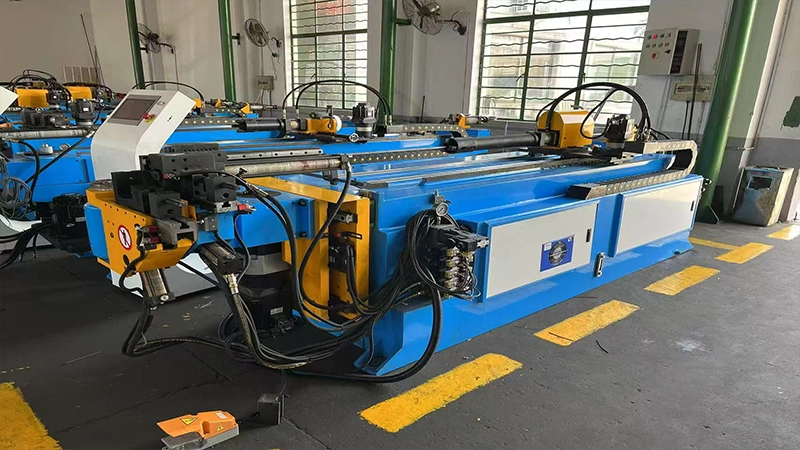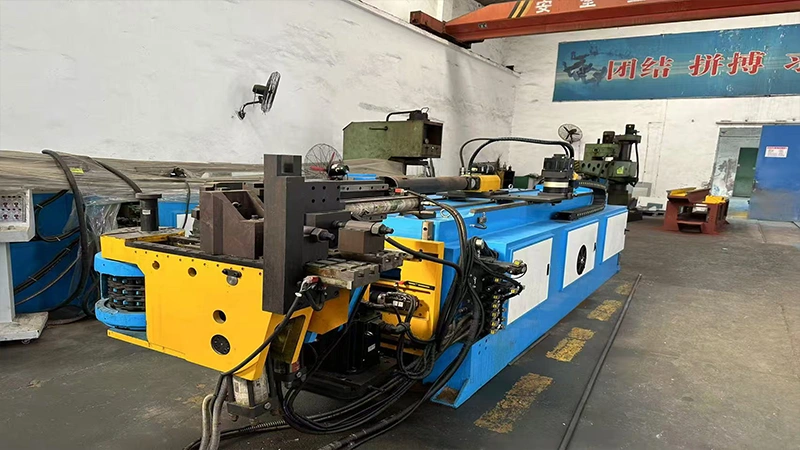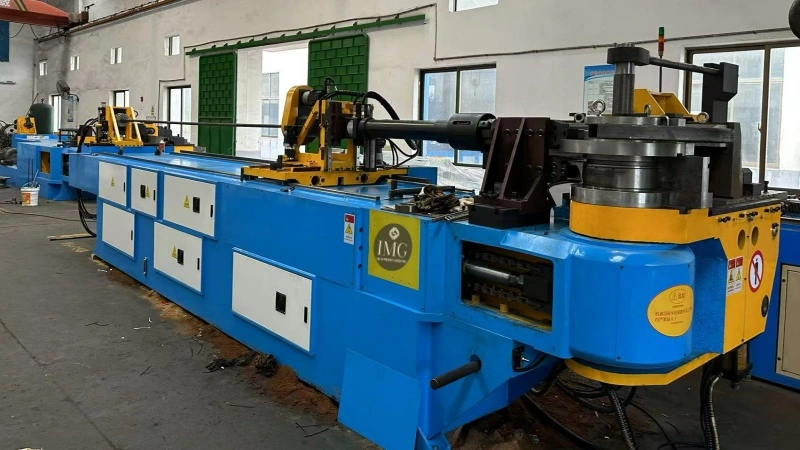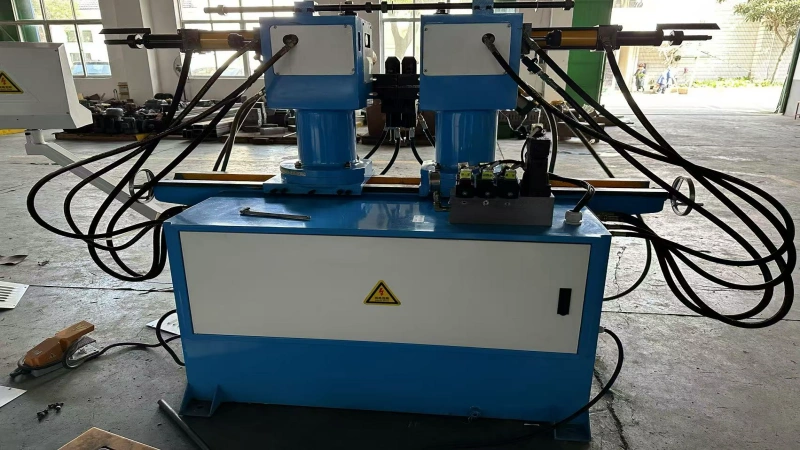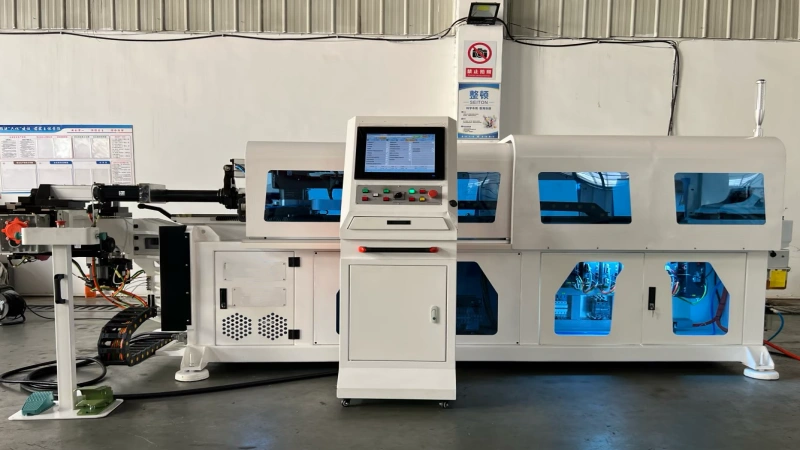
Pipe Bending Machine
In the vast landscape of industrial manufacturing, few processes are as ubiquitous yet technically demanding as tube and pipe fabrication. From the complex exhaust systems of high-performance automobiles to the structural frameworks of modern furniture and the critical infrastructure of aerospace engineering, bent metal tubing is everywhere. At the heart of this transformation lies a piece of equipment that blends brute force with microscopic precision: the pipe bending machine.
For manufacturers and fabricators, understanding the nuances of these machines is not just about shaping metal; it is about shaping the efficiency, cost-effectiveness, and quality of production lines. As industries evolve towards higher automation and tighter tolerances, the humble pipe bender machine has undergone a radical technological metamorphosis. This guide delves deep into the mechanics, types, applications, and selection criteria of these essential tools, offering a roadmap for businesses looking to elevate their fabrication capabilities.
The Engineering Core: How a Pipe Bending Machine Works
To appreciate the capabilities of a modern pipe bending machine, one must first understand the physics at play. Bending a pipe is not merely about forcing it around a curve; it is a battle against the material’s natural tendency to resist deformation. When a pipe is bent, the material on the outside of the curve undergoes tension (stretching), while the material on the inside undergoes compression.
The primary challenge in this process is maintaining the pipe's structural integrity. Without precise control, the stretching outer wall can thin to the point of failure, while the compressing inner wall can buckle or wrinkle. Furthermore, the cross-section of the pipe tends to flatten, losing its perfect roundness—a defect known as ovality.
High-quality bending pipes machine technology addresses these physical challenges through a combination of leverage, precise tooling, and containment. The machine must secure the pipe firmly while applying force at a specific point, often utilizing a mandrel—a solid rod or linked ball inserted inside the pipe—to support the walls and prevent collapsing. The sophistication of this interaction between the machine, the tooling, and the material defines the quality of the final bend. Whether dealing with stainless steel, aluminum, copper, or carbon steel, the machine's ability to manage "springback"—the metal's tendency to return to its original shape after bending—is the mark of a truly professional system.
The Spectrum of Technology: Types of Pipe Bender Machines
The market offers a diverse array of machinery, each designed to answer specific production needs. Categorizing them helps in understanding which solution fits a specific industrial application.
- CNC Pipe Bending Machines
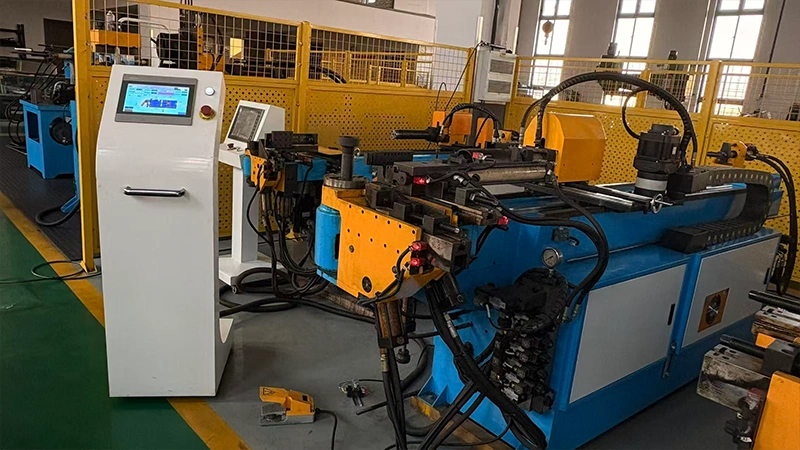
The pinnacle of modern bending technology is the Computer Numerical Control (CNC) pipe bending machine. These systems are the standard for high-volume, high-precision industries like automotive and aerospace. A CNC bender operates via a programmable computer interface, controlling multiple axes of movement simultaneously. This allows for complex, multi-plane bends that would be impossible to achieve manually.
CNC machines offer repeatability that is unmatched. Once a program is set, the machine can produce thousands of identical parts with sub-millimeter accuracy. Modern CNC benders often feature electric servo motors, which provide cleaner, quieter, and more energy-efficient operation compared to traditional hydraulic systems. They can automatically adjust for springback based on material data, ensuring the first part is as accurate as the last.
- NC and Hydraulic Pipe Bending Machines
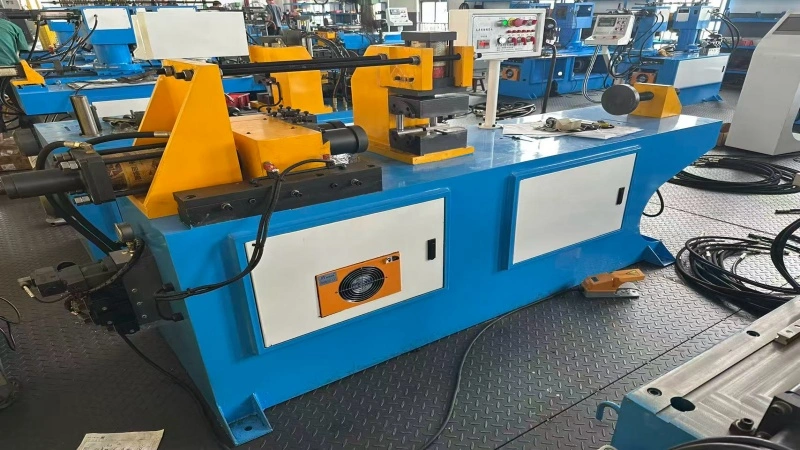
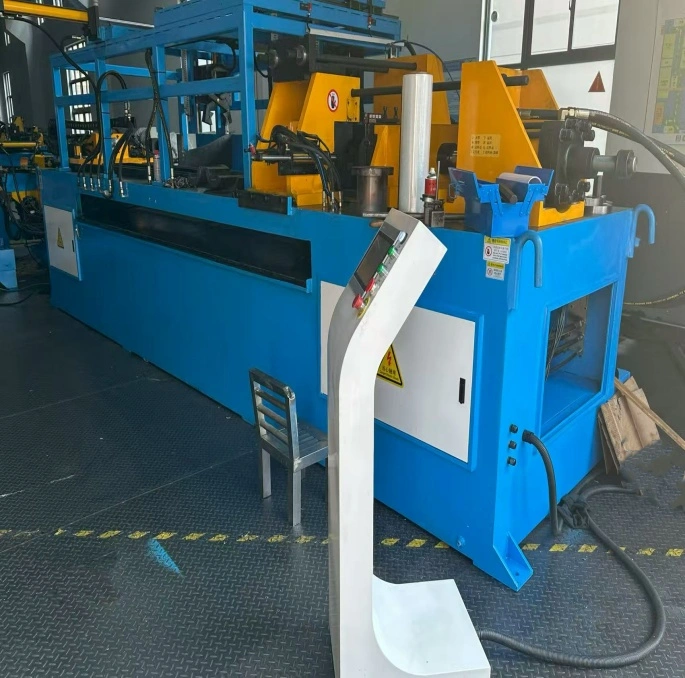
While CNC represents the high end, NC (Numerical Control) and semi-automatic hydraulic machines remain the workhorses for many fabrication shops. These pipe bender machine models are often more cost-effective and are ideal for simpler bending operations where multi-axis complexity is not required.
Hydraulic benders rely on fluid power to generate the immense force needed to bend thick-walled or large-diameter pipes. They are renowned for their durability and power. An NC machine usually controls the bend angle automatically, while the rotation of the pipe and the feeding length might be handled manually or semi-automatically. For shipyards, construction frameworks, and heavy equipment manufacturing, the raw power of a hydraulic bending pipes machine is often the preferred choice.
- Electric vs. Hybrid Benders
A significant trend in the industry is the shift toward all-electric benders. Unlike hydraulic systems, which can suffer from oil temperature fluctuations that affect speed and accuracy, electric machines offer consistent performance regardless of the environment. They are cleaner (no oil leaks) and easier to maintain. Hybrid machines attempt to bridge the gap, using hydraulics for the heavy clamping forces and electric servos for the precise bending axes, offering a balance of power and precision.
The Critical Role of Tooling in Bending Operations
Owning a pipe bending machine is only half the equation; the tooling utilized is equally critical. The "tooling set" typically consists of a bend die (the form the pipe bends around), a clamp die (holding the pipe against the bend die), a pressure die (pushing the pipe), a wiper die (preventing wrinkles), and the mandrel.
The mandrel is perhaps the most crucial component for tight-radius bends. Inserted inside the tube, it acts as a flexible internal skeleton. In rotary draw bending, as the bending pipes machine pulls the material around the die, the mandrel supports the inner wall. Without a properly lubricated and positioned mandrel, achieving a smooth, wrinkle-free bend on thin-walled tubing is virtually impossible.
Furthermore, the wiper die plays a vital preventive role. Placed intimately against the bend die, it acts like a smoothing iron, preventing the material from bunching up on the inside radius. The precision alignment of these tools requires a machine with a rigid chassis and stable headstock, underscoring the importance of investing in high-quality machinery.
Industrial Applications: Where the Pipe Bending Machine Shines
The versatility of the pipe bender machine has cemented its status across a wide vertical of industries.
Automotive Industry: This is the largest consumer of bending technology. From exhaust manifolds to fuel lines, brake tubing, and structural chassis components (like roll cages), the automotive sector demands high-speed production with zero defects. CNC benders are exclusively used here to navigate the tight spaces of modern engine bays.
Furniture Manufacturing: The aesthetic appeal of tubular steel furniture relies on smooth, distortion-free bends. Whether it is office chairs, tables, or modernist architectural features, the visual quality of the bend is paramount. Here, the machine must ensure no surface marks are left on the chrome or powder-coated tubes.
Shipbuilding and Heavy Construction: Large-diameter piping systems for transporting fluids, gas, and oil require massive hydraulic benders. These machines often operate on the field or in shipyards, bending pipes that are several inches thick.
HVAC and Refrigeration: The intricate coils found in air conditioners and heat exchangers require specialized bending pipes machine units capable of creating serpentine bends without kinking, ensuring efficient flow of refrigerants.
Beyond the Bend: The Importance of Pipe End Forming
While the focus is often on the bend itself, a pipe is rarely useful immediately after bending. It must be connected to other components, which brings us to a critical, often overlooked complementary process: Pipe End Forming.
A high-quality pipe bending machine creates the shape, but an End Forming Machine prepares the connection. Whether the pipe needs to be expanded, reduced, flared, beaded, or flanged, the end forming process ensures a leak-proof seal and structural connectivity.
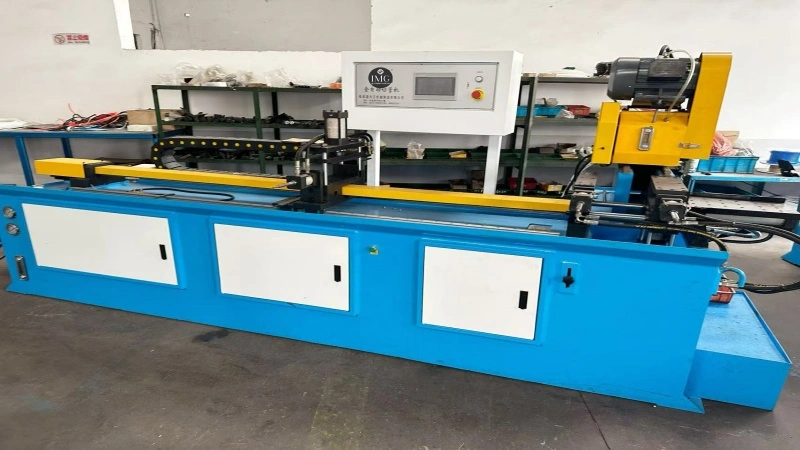
For example, in automotive exhaust systems, after the pipe is bent to fit under the chassis, the ends must be expanded to slip over the next section of piping. In hydraulic lines, the ends must be flared to accept fittings. Therefore, when setting up a production line, one cannot look at the pipe bender machine in isolation. It is part of a holistic system that includes cutting, deburring, bending, and finally, precision end forming. The synergy between your bending equipment and your end forming capabilities defines the overall throughput and quality of your manufacturing floor.
Selecting the Right Machine: Factors to Consider
Investing in a pipe bending machine is a significant capital expenditure. Making the right choice requires a careful analysis of production requirements.
- Material and Dimensions: What is the maximum Outside Diameter (OD) and Wall Thickness of the tube? Stainless steel requires significantly more torque to bend than mild steel or aluminum. A machine rated for 2-inch mild steel may not handle 2-inch stainless steel.
- Bend Radius (CLR): The Center Line Radius is critical. Extremely tight bends (e.g., 1x the diameter of the tube, or 1D) require complex rotary draw machines with boosters and mandrels. Larger radii (like 5D or 10D) might be achievable with simpler roll bending machines.
- Production Volume: For prototyping or custom job shops, a semi-automatic or NC pipe bender machine offers flexibility and quick changeovers. For runs of 10,000+ parts, a fully automated CNC machine with auto-loading capabilities is the only economically viable option.
- Complexity of Bends: Does the part require bends in multiple planes? If the distance between bends is short, or if the part rotates into itself, interference becomes an issue. Advanced CNC software can simulate these bends to prevent collisions before the metal is even touched.
Maintenance and Safety: Ensuring Longevity
A bending pipes machine is subject to immense stress. Regular maintenance is non-negotiable for preserving accuracy and safety.
Hydraulic systems require regular fluid checks and filter changes to prevent contamination, which can destroy valves and seals. Electric machines need less fluid maintenance but require inspection of drive belts, gears, and servo calibration.
Crucially, the tooling must be kept clean and lubricated. Metal shavings and debris can score the dies and the pipe surface, leading to rejected parts. In terms of safety, modern machines are equipped with light curtains, pressure mats, and emergency stops. Operators must be trained not just in programming, but in the physical hazards of the swinging pipe arm—a "kill zone" that must be respected during operation.
Future Trends in Tube Fabrication
The future of the pipe bending machine is digital. Industry 4.0 integration allows these machines to communicate with ERP systems, providing real-time data on production rates and machine health. We are seeing the rise of "correction loops" where laser measurement systems check a bent part and automatically send correction data back to the bender to adjust for springback variance in the very next part.
Furthermore, the integration of bending with other processes—such as punching and end forming—into single manufacturing cells is becoming common. This reduces handling time and increases overall precision.
Product Overview: High-Performance Solutions
To assist in your selection process, we have compiled a summary of typical high-performance machinery options available in the market. While configurations vary, this table provides a baseline for what to expect from professional-grade equipment.
| Brand / Series | Product Name | Key Features | Target Application | Estimated Price Category |
| TubingMachinery Pro | CNC-50-RE Electric Bender | All-electric 5-axis control, eco-friendly, high speed, minimal maintenance, 3D simulation software included. | Automotive, Aerospace, High-Precision Furniture | Premium / High |
| TubingMachinery Hydro | NC-75-H Hydraulic Bender | Heavy-duty hydraulic clamping, NC control for bend angles, touch screen interface, robust steel frame. | Shipyards, Boiler Manufacturing, Heavy Construction | Mid-Range |
| TubingMachinery Auto | SB-38-Auto CNC | Hybrid system (Hydraulic clamp/Electric bend), auto-loading compatible, mandrel lubrication system, high repeatability. | General Fabrication, Automotive Exhausts | Mid-to-High |
| TubingMachinery Form | End-Former 60 | Complementary Unit: Hydraulic end forming for expanding, reducing, and flaring. Fast cycle times. | All industries requiring tube connection | Entry-to-Mid |
Note: Prices vary significantly based on customization, tooling requirements, and shipping logistics. Please contact our sales team for a detailed quote tailored to your specific production needs.
The Path to Precision
The journey of transforming a straight metal tube into a functional component is one of engineering elegance. The pipe bending machine is not just a tool; it is the cornerstone of modern fabrication capabilities. Whether you are bending intricate fuel lines for an aircraft or robust handrails for a stadium, the principles remain the same: precision, repeatability, and control.
However, the process rarely ends at the bend. As we have explored, integrating high-quality bending with precise Pipe End Forming is what truly completes the production cycle. By understanding the capabilities of different pipe bender machine types—from the raw power of hydraulics to the surgical precision of electric CNCs—manufacturers can optimize their workflows, reduce waste, and deliver superior products to the market.
In an era where efficiency is the currency of success, upgrading your machinery and understanding the deep technicalities of the bending pipes machine is the smartest investment a fabricator can make. Ensure your production line is equipped not just for today's demands, but for the innovations of tomorrow.