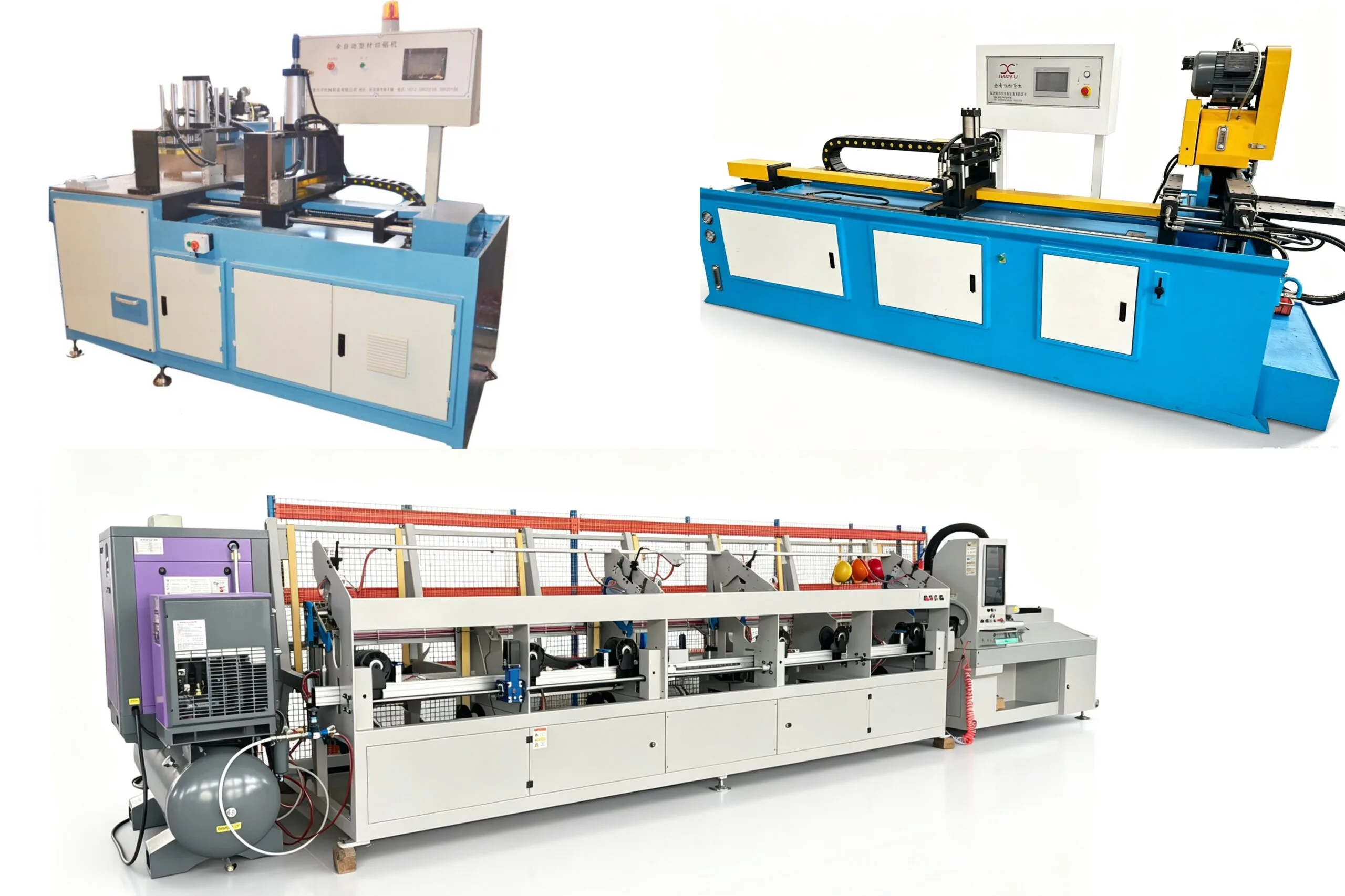
آلة ثني الأنابيب الروبوتية مقابل آلة ثني الأنابيب الأوتوماتيكية CNC القياسية – معدات آلات IMG

معدات آلات IMG

آلة ثني الأنابيب الروبوتية مقابل آلة ثني الأنابيب الأوتوماتيكية CNC القياسية

س1: ما الفرق بين آلة تحكم أنابيب روبوتي للتحميل والتفريغ و آلة ثني الأنابيب الأوتوماتيكية بالكامل القياسية?

ج: 1: آلة ثني أنابيب CNC أوتوماتيكية قياسية
مجهزة بآلية تغذية وتفريغ مدمجة. يكمل التوصيل والدوران والانحناء تلقائيا داخل إطار الآلة.
تقتصر قطع العمل على الأنابيب المستقيمة التي تحمل في رف المواد الخاص بالماكينة.
مناسب للإنتاج الضخم بأنابيب مستقيمة موحدة.

2: خلية ثني الأنابيب الروبوتية (مع ذراع روبوت للتحميل والتفريغ)
محطة عمل كاملة تتكون من جهاز تحكم أنابيب CNC + روبوت صناعي.
يتولى الروبوت جمع المواد الخام، تحميلها، تفريغ الأجزاء النهائية، ويمكنه الاتصال بمحطات أخرى (القطع، التشكيل، الفحص).
يمكن للروبوت التقاط أنابيب مثنية مسبقا، وقطع عمل غير منتظمة، وتحقيق إنتاج مرن بدون طاقة.

س2: ما هي عملية عمل آلة ثني الأنابيب الروبوتية؟

  1. الروبوت يختار الأنابيب الخام من محطة المواد
  2. يقوم الروبوت بتحميل الأنبوب في منشأة تثبيت الأنابيب CNC
  3. آلة CNC تكمل الانحناء التلقائي
  4. يقوم الروبوت بتفريغ الأنبوب النهائي بعد ثنيه
  5. يقوم الروبوت بنقل الأجزاء النهائية إلى منطقة التكديس أو العملية التالية

س3: ماذا تعني سعة حمل الروبوت ونصف قطر العمل؟

A:

  • سعة الحمل: الحد الأقصى لوزن الأنبوب والممسك الذي يمكن لذراع الروبوت تحمله بثبات. نحتاج لتأكيد وزن الأنبوب قبل التكوين.
  • نصف قطر العمل: أقصى مدى حركة لذراع الروبوت. يحدد تصميم رف المواد، وآلة الثني، ومنطقة المنتج النهائي.

س4: ما هي المزايا الرئيسية لآلة ثني الأنابيب الروبوتية؟

A:

  1. مرونة عالية: متوافقة مع أشكال ومواصفات الأنابيب المتعددة
  2. من السهل الربط مع المعدات العليا واللاحقة لتشكيل خط إنتاج أوتوماتيكي
  3. دعم العمليات بدون طيار طويلة الأمد
  4. وفر تكلفة العمالة عند التحميل والتفريغ

س5: أي واحد يجب أن أختار؟

ج: اختيار تثنيي أنابيب CNC أوتوماتيكي قياسي: الإنتاج الضخم للأنابيب المستقيمة، مواصفات المنتج الثابتة، التحكم في الميزانية.
اختر خلية ثني الأنابيب الروبوتية: إنتاج متعدد الأنواع المرن، تحتاج إلى توصيل معدات معالجة أخرى، ومتابعة ورشة عمل كاملة بدون مراقبة.
مدونة ذات صلة

Fiber laser tube cutting machine, cnc automatic metal pipe laser cutter for round and square tube high‑precision cutting

Pipe Sawing vs Pipe Laser Cutting Machine – Full Detailed Technical & Commercial Comparison

Overview This full comparison covers working principle, cutting quality, precision, material adaptability, production efficiency, labor cost, consumables, failure rate, total ownership cost (TCO), and industrial application scenarios, serving for customer technical consultation, quotation scheme matching, and product detail page content. 1.1 Pipe Sawing Machine (Cold Circular Pipe Saw) Pipe sawing is a traditional mechanical contact cutting process. It relies on a high-speed rotating carbide circular saw blade to physically shear, extrude and cut off metal pipes. Most industrial models adopt cold sawing technology, which uses coolant to take away cutting heat to avoid pipe end blackening and high-temperature deformation. The…

اقرأ المزيد »
laser cutting machine saw cutting machine ,aluminum pipe cutting machine

How to Choose a Pipe Cutting Machine

What key points should I look at before buying a pipe cutting machine? A: Start with your actual production needs. Confirm tube material, outer diameter and wall‑thickness range, required cutting tolerance, daily output, and whether you need automatic feeding. Also take budget and supplier after‑sales support into consideration. Sending real‑part samples or drawings to the manufacturer will help you get a proper proposal. Cold sawing pipe cutting machine or laser pipe cutting machine , which suits my job? A:Cold sawing machines work great for high‑volume straight cutting. They create little heat deformation and deliver clean cut ends at a lower…

اقرأ المزيد »
metal pipe shrinking and expanding machine with different tools

Pipe Shrinking vs Pipe Expanding: Key Differences in Tube End Forming

In modern metal tube manufacturing, tube end forming is one of the most essential processes for pipe assembly, structural fitting, and mechanical part production. Among all forming methods, pipe shrinking and pipe expanding are the two most widely used cold-forming processes. Although both processes modify tube end dimensions for pipe connection purposes, their working principles, final shapes, assembly logics, and application industries are completely different. Choosing the correct process directly affects product quality, assembly efficiency, and production yield. Pipe shrinking is a cold-forming process that compresses the tube end to a smaller outer diameter. By hydraulic or mechanical extrusion, the…

اقرأ المزيد »