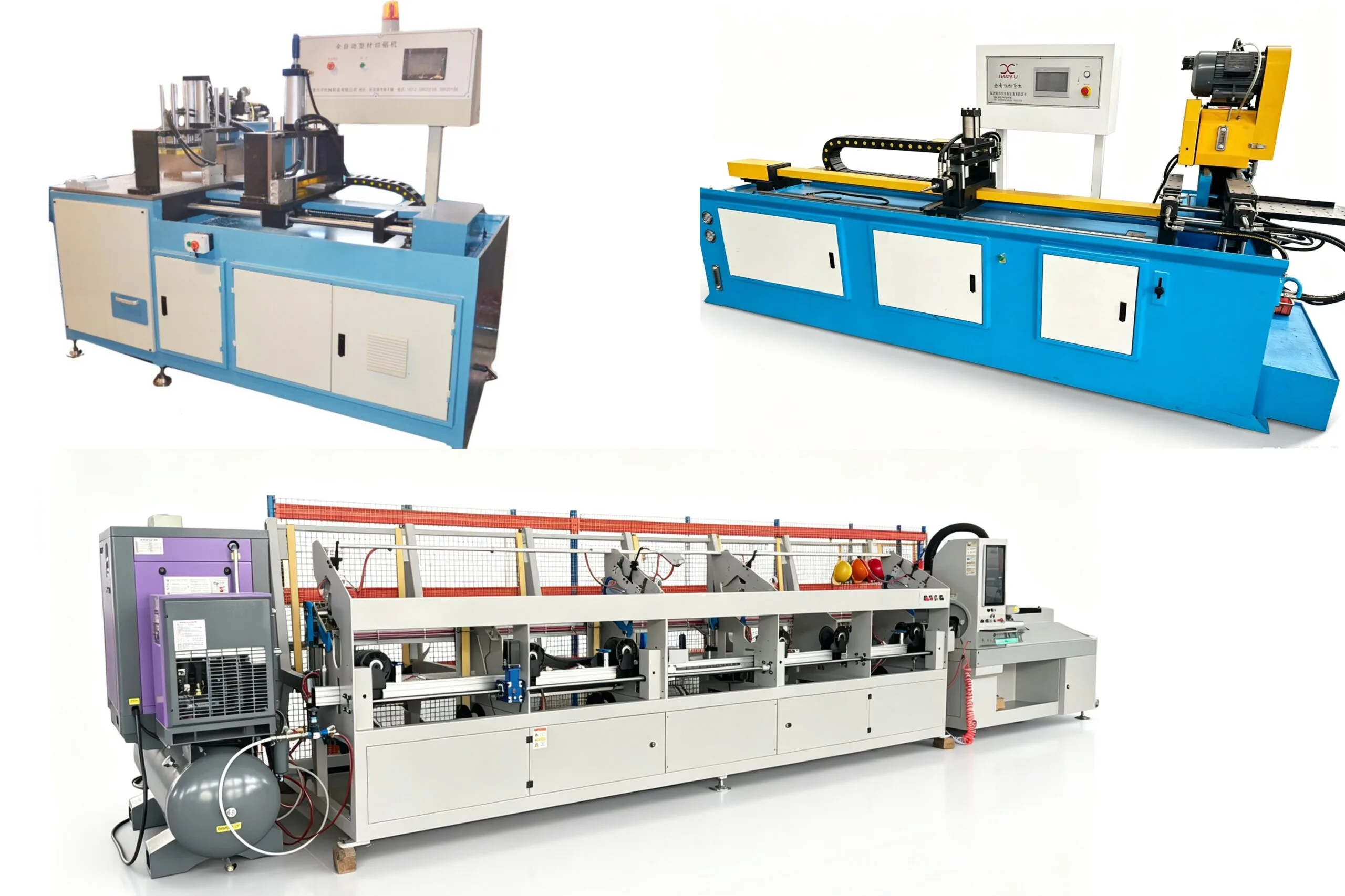
เครื่องดัดท่อหุ่นยนต์ เทียบกับเครื่องดัดท่อ CNC อัตโนมัติมาตรฐาน – อุปกรณ์เครื่องจักร IMG

อุปกรณ์เครื่องจักร IMG

เครื่องดัดท่อหุ่นยนต์ เทียบกับเครื่องดัดท่อ CNC อัตโนมัติมาตรฐาน

คําถามที่ 1: ความแตกต่างระหว่าง เครื่องดัดท่อแบบหุ่นยนต์สําหรับโหลดและขนถ่าย และ a เครื่องดัดท่ออัตโนมัติมาตรฐานเต็มรูปแบบ?

A: 1: เครื่องดัดท่อ CNC อัตโนมัติเต็มรูปแบบมาตรฐาน
ติดตั้งระบบป้อนและปล่อยในตัว ระบบนี้สามารถป้อน หมุน และดัดโดยอัตโนมัติภายในกรอบเครื่องจักร
ชิ้นงานจํากัดอยู่ที่ท่อตรงที่บรรจุลงในชั้นวางวัสดุของเครื่องจักร
เหมาะสําหรับการผลิตท่อตรงมาตรฐานจํานวนมาก

2: เซลล์ดัดท่อหุ่นยนต์ (พร้อมแขนกลสําหรับโหลด/ขนถ่าย)
เวิร์กสเตชันครบวงจรประกอบด้วยเครื่องดัดท่อ CNC + หุ่นยนต์อุตสาหกรรม
หุ่นยนต์นี้จัดการการหยิบวัตถุดิบ การโหลด การขนถ่ายชิ้นส่วนสําเร็จรูป และสามารถเชื่อมต่อกับสถานีอื่น ๆ (การตัด ขึ้นรูป ตรวจสอบ)
หุ่นยนต์สามารถจับหลอดที่ดัดไว้ล่วงหน้า ชิ้นงานที่ไม่เรียบ และสร้างการผลิตแบบไร้คนขับที่ยืดหยุ่น

คําถามที่ 2: กระบวนการทํางานของเครื่องดัดท่อหุ่นยนต์เป็นอย่างไร?

  1. หุ่นยนต์หยิบหลอดดิบจากสถานีวัสดุ
  2. หุ่นยนต์โหลดท่อลงในอุปกรณ์จับยึด CNC สําหรับดัดท่อ
  3. เครื่อง CNC ดัดอัตโนมัติเสร็จสมบูรณ์
  4. หุ่นยนต์ขนถ่ายท่อที่เสร็จแล้วหลังจากดัด
  5. หุ่นยนต์ย้ายชิ้นส่วนที่เสร็จสมบูรณ์ไปยังพื้นที่จัดซ้อนหรือกระบวนการถัดไป

คําถามที่ 3: ความสามารถในการรับน้ําหนักและรัศมีการทํางานของหุ่นยนต์หมายถึงอะไร?

A:

  • ความสามารถในการรับน้ําหนัก: น้ําหนักสูงสุดของท่อและกริปเปอร์ที่แขนหุ่นยนต์สามารถจัดการได้อย่างมั่นคง เราต้องยืนยันน้ําหนักท่อก่อนกําหนดค่า
  • รัศมีการทํางาน: ระยะการเคลื่อนไหวสูงสุดของแขนหุ่นยนต์ มันกําหนดการจัดวางชั้นวางวัสดุ เครื่องดัด และพื้นที่ผลิตภัณฑ์สําเร็จรูป

คําถามที่ 4: ข้อได้เปรียบหลักของเครื่องดัดท่อหุ่นยนต์คืออะไร?

A:

  1. ความยืดหยุ่นสูง: รองรับรูปทรงและสเปกของท่อหลายแบบ
  2. เชื่อมต่อกับอุปกรณ์ต้นน้ําและปลายน้ําได้ง่ายเพื่อสร้างสายการผลิตอัตโนมัติ
  3. รองรับการปฏิบัติการไร้คนขับเป็นเวลานาน
  4. ประหยัดค่าแรงในการโหลดและขนถ่าย

คําถามที่ 5: ควรเลือกอันไหนดี?

ตอบ: เลือกเครื่องดัดท่อ CNC อัตโนมัติมาตรฐาน: ผลิตท่อตรงจํานวนมาก กําหนดสเปกสินค้า ควบคุมงบประมาณ
เลือกเซลล์ดัดท่อหุ่นยนต์: ผลิตได้หลากหลายแบบ ต้องเชื่อมต่ออุปกรณ์แปรรูปอื่น ๆ และทํางานเวิร์กช็อปแบบไม่มีผู้ดูแล
บล็อกที่เกี่ยวข้อง

Fiber laser tube cutting machine, cnc automatic metal pipe laser cutter for round and square tube high‑precision cutting

Pipe Sawing vs Pipe Laser Cutting Machine – Full Detailed Technical & Commercial Comparison

Overview This full comparison covers working principle, cutting quality, precision, material adaptability, production efficiency, labor cost, consumables, failure rate, total ownership cost (TCO), and industrial application scenarios, serving for customer technical consultation, quotation scheme matching, and product detail page content. 1.1 Pipe Sawing Machine (Cold Circular Pipe Saw) Pipe sawing is a traditional mechanical contact cutting process. It relies on a high-speed rotating carbide circular saw blade to physically shear, extrude and cut off metal pipes. Most industrial models adopt cold sawing technology, which uses coolant to take away cutting heat to avoid pipe end blackening and high-temperature deformation. The…

อ่านเพิ่มเติม "
laser cutting machine saw cutting machine ,aluminum pipe cutting machine

How to Choose a Pipe Cutting Machine

What key points should I look at before buying a pipe cutting machine? A: Start with your actual production needs. Confirm tube material, outer diameter and wall‑thickness range, required cutting tolerance, daily output, and whether you need automatic feeding. Also take budget and supplier after‑sales support into consideration. Sending real‑part samples or drawings to the manufacturer will help you get a proper proposal. Cold sawing pipe cutting machine or laser pipe cutting machine , which suits my job? A:Cold sawing machines work great for high‑volume straight cutting. They create little heat deformation and deliver clean cut ends at a lower…

อ่านเพิ่มเติม "
metal pipe shrinking and expanding machine with different tools

Pipe Shrinking vs Pipe Expanding: Key Differences in Tube End Forming

In modern metal tube manufacturing, tube end forming is one of the most essential processes for pipe assembly, structural fitting, and mechanical part production. Among all forming methods, pipe shrinking and pipe expanding are the two most widely used cold-forming processes. Although both processes modify tube end dimensions for pipe connection purposes, their working principles, final shapes, assembly logics, and application industries are completely different. Choosing the correct process directly affects product quality, assembly efficiency, and production yield. Pipe shrinking is a cold-forming process that compresses the tube end to a smaller outer diameter. By hydraulic or mechanical extrusion, the…

อ่านเพิ่มเติม "