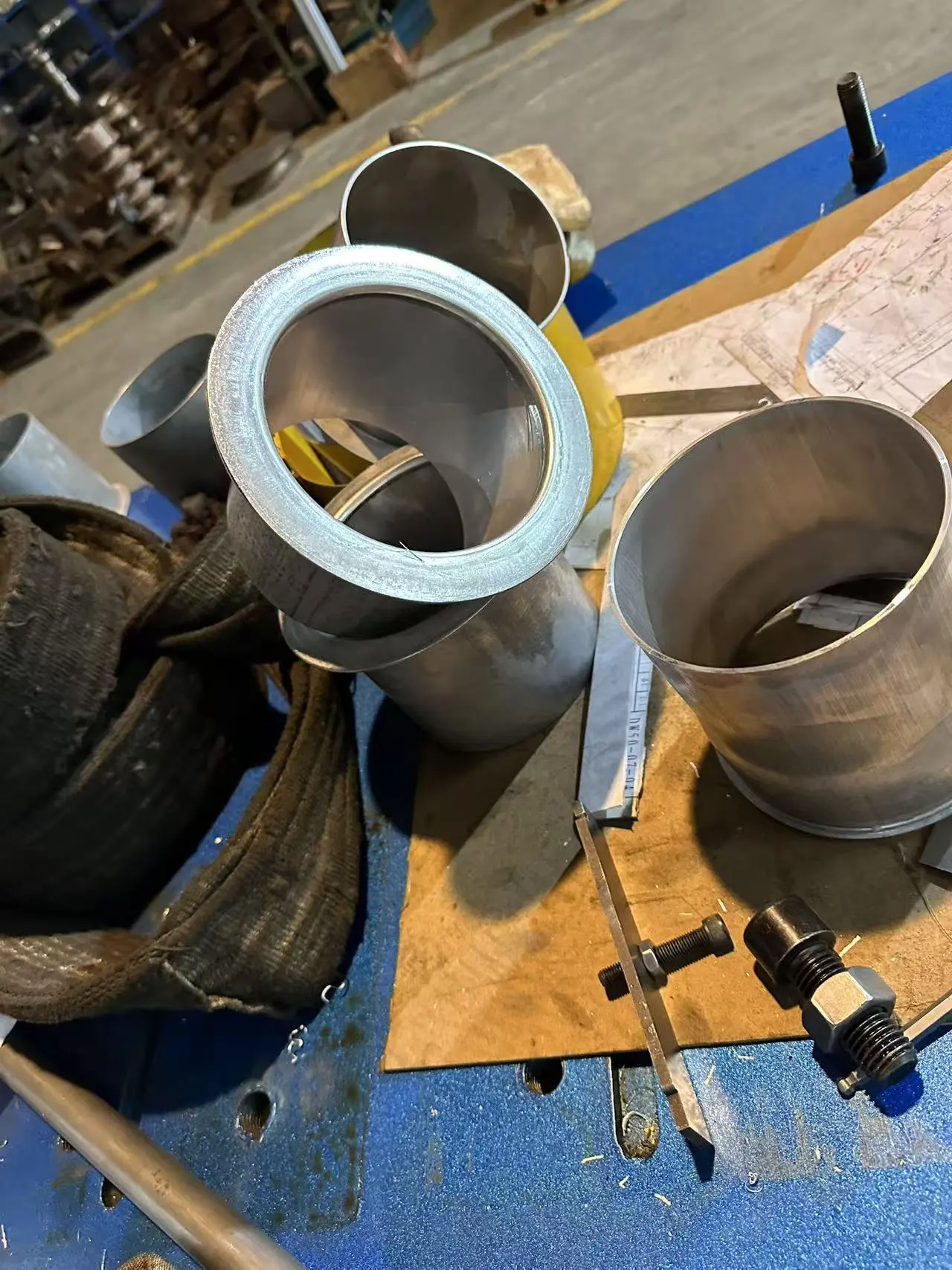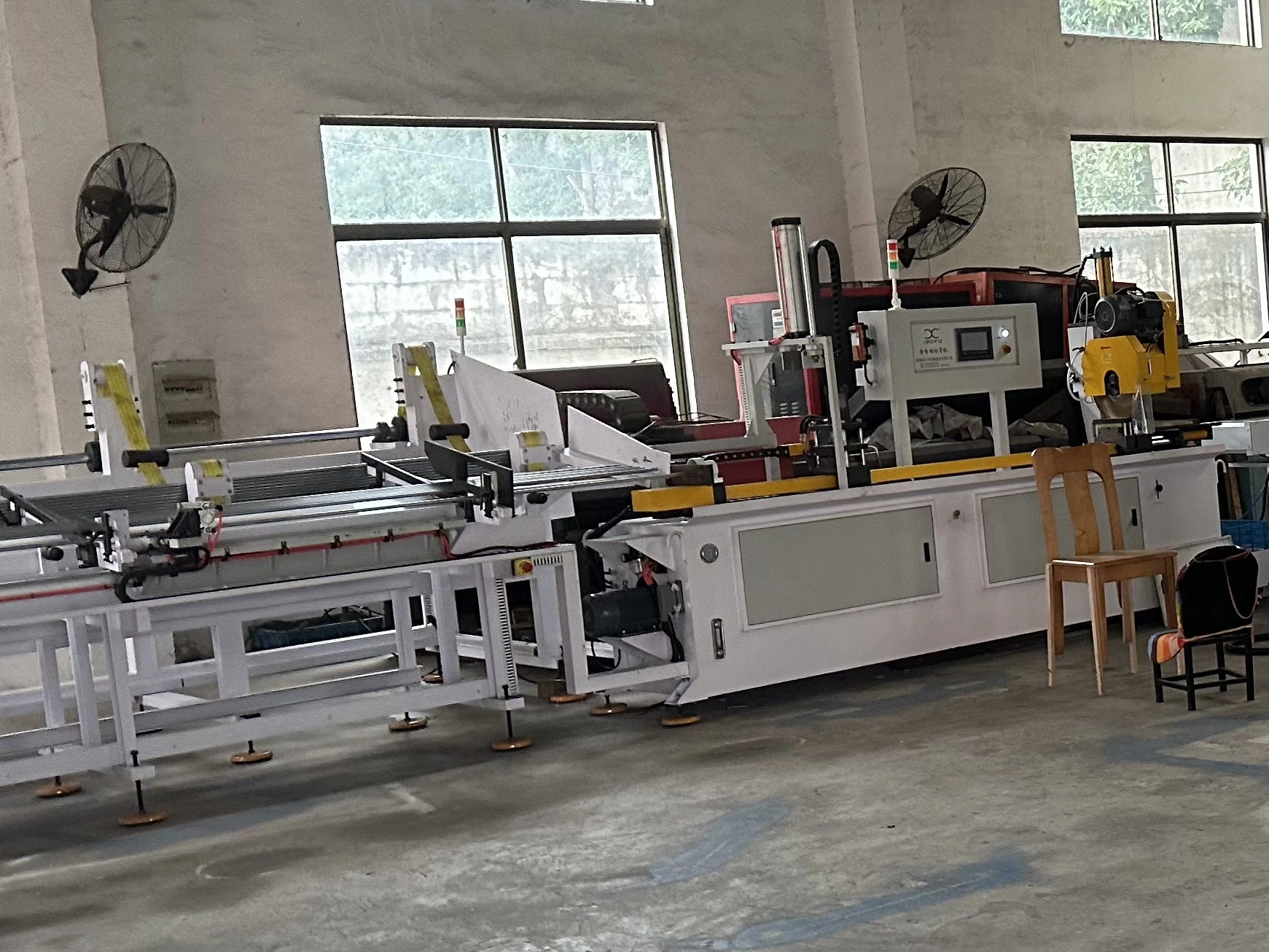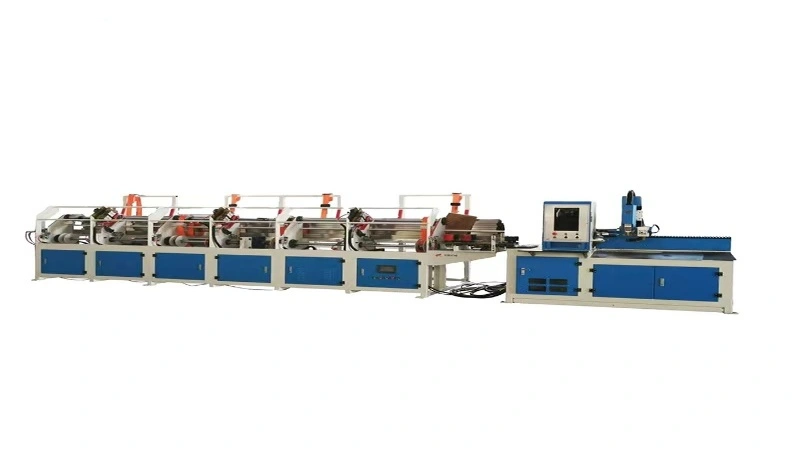
Pipe cutting is the primary working procedure for tubular parts. Different cutting methods deliver distinct performance in accuracy, edge quality and material adaptability. Proper selection should take cutting mode, tube material, wall thickness, required precision, batch size and downstream‑process requirements into consideration.
1. Main Pipe‑Cutting Methods
- Mechanical Circular Cold Saw Cutting Rotary carbide saw blade performs mechanical shearing cutting.
- Features: Economic investment; produces burrs and inner flash; requires subsequent deburring / chamfering.
- Typical cutting range: Straight‑to‑length cut, limited fixed‑angle bevel cut. Cannot cut holes, slots or complex contours.
- Abrasive Wheel Cutting High‑speed grinding wheel friction cutting. ‑ Features: Low equipment cost; heavy burrs, large heat‑affected zone, rough cut surface. Mainly for low‑requirement rough cutting.
- Fiber Laser Pipe Cutting Non‑contact thermal cutting by high‑energy laser beam with assist gas blowing away molten material. ‑ Features: High precision, narrow kerf, smooth cut face. Realizes straight cut, bevel, hole, slot, cope and complex profile in one clamping. Higher initial investment.
- Band Saw Cutting Endless band‑blade reciprocating sawing. ‑ Features: Good for large‑diameter heavy‑wall thick pipes; low cutting speed; rough cut edge with burrs.

2. Material Adaptability of Each Cutting Method
| Cutting Method | Carbon Steel | Stainless Steel | Aluminum / Copper | Alloy Thick‑Wall Tube | Thin‑Wall Tube |
|---|---|---|---|---|---|
| Circular Cold Saw | ✅ Excellent | ✅ Good | ⚠️ Fair (blade wear fast) | ✅ Excellent | ⚠️ Risk of tube collapse |
| Abrasive Wheel | ✅ Good | ❌ Poor (heavy burr & heat discoloration) | ❌ Poor | ✅ Fair | ❌ Not recommended |
| Fiber Laser | ✅ Excellent | ✅ Excellent | ✅ Excellent | ⚠️ Subject to laser power | ✅ Excellent (non‑contact, no deformation) |
| Band Saw | ✅ Excellent | ✅ Good | ⚠️ Fair | ✅ Excellent | ❌ Not recommended |
3.Accuracy & Kerf Reference
| Cutting Method | Typical Length Tolerance | Kerf Width | Cut‑Edge Condition |
|---|---|---|---|
| Circular Cold Saw | ±0.1 ~ ±0.5 mm | 1.5‑3 mm | Burr, inner flash, need deburring |
| Abrasive Wheel | ±0.3 ~ ±0.8 mm | 2‑4 mm | Rough edge, heat discoloration, heavy burr |
| Fiber Laser | ±0.02 ~ ±0.05 mm | <0.2 mm | Near‑burr‑free, minimal heat‑affected zone |
| Band Saw | ±0.2 ~ ±0.6 mm | 1‑2.5 mm | Burr, uneven cut surface |
Note: Actual accuracy will be affected by machine condition, fixture, tool / consumable wear and operator.
4. Key Selection Factors
- Tube material & wall thickness: Thin‑wall tubes avoid abrasive‑wheel / band‑saw; laser is preferred to prevent deformation. Extra‑thick alloy large‑diameter pipes give priority to cold saw or band saw.
- Required precision: Welding‑grade high‑precision parts → laser; general structural parts → cold‑saw / band‑saw.
- Cutting content: Only length cutting → cold‑saw; need holes, slots, coped joints → laser.
- Batch & change‑over: High‑mix frequent change‑over: laser (program‑only switch). Stable simple parts in large batches: cold‑saw.
- Down‑stream process: If cutting surface goes directly to welding / assembly, prioritize better‑edge‑quality cutting solution.
- Budget & running‑cost: Evaluate total‑ownership‑cost including consumables and post‑processing labour, not only machine purchase price.
5. Common Mistakes
- Ignore thin‑wall tube deformation risk and select abrasive‑wheel / band‑saw.
- Expect high‑precision welding‑grade edge from low‑cost abrasive‑wheel cutting.
- Neglect post‑processing labour cost when comparing equipment price.
- Choose laser for simple rough‑cut low‑volume work, resulting in low equipment utilization.
FAQ
Q1: What are the mainstream pipe‑cutting methods?
A: Main types: circular cold saw cutting, abrasive‑wheel cutting, fiber laser pipe cutting and band‑saw cutting. Each differs in precision, material suitability and edge quality.
Q2: Which cutting method is most suitable for thin‑wall tube?
A: Fiber laser cutting is preferred for thin‑wall tubing. Non‑contact processing avoids tube squeezing and collapse. Cold‑saw may cause deformation due to mechanical clamping force. Abrasive‑wheel and band‑saw are not recommended.
Q3: Which cutting way fits large‑diameter thick‑wall alloy pipe?
A: Circular cold saw or band‑saw are more suitable. Laser capability depends on laser power and may become costly for super‑thick heavy‑wall tubes.
Q4: What accuracy can I get from cold‑saw vs laser pipe cutting?
A: Circular cold‑saw typical tolerance: ±0.1‑0.5 mm, affected by saw‑blade wear and vibration. Fiber laser achieves ±0.02‑0.05 mm stable repeat accuracy.
Q5: Can cold‑saw / band‑saw cut holes or slots on pipe body?
A: No. They can only complete length cutting or simple bevel. Holes, slots and coped profiles must use laser cutting or follow‑up separate machining.
Q6: My parts only need simple length cutting, which one to choose?
A: For ordinary structural tubes with loose tolerance: circular cold‑saw is cost‑effective. If strict length tolerance and welding‑ready cut‑face are required, select fiber laser.
Q7: Why abrasive‑wheel cutting is not recommended for stainless‑steel and aluminum tubes?
A: Abrasive‑wheel generates massive heat, causing serious heat discoloration, heavy burrs and poor surface quality. Subsequent polishing workload increases greatly.
Q8: What information do I need to provide for pipe‑cutting‑machine selection?
A: Pipe outer diameter, wall thickness, material, required dimensional tolerance, cutting content (only length / hole / slot / bevel), production batch, downstream‑process requirements.
Q9: Does laser‑cut surface completely skip deburring work?
A: Under proper parameter setting, laser cut‑face has minimal burr for most work‑pieces. Individual heavy‑wall work‑pieces may still need slight secondary trimming.
Q10: High‑mix production with frequent drawing change‑over, which cutting method is better?
A: Fiber laser cutting. Switch cutting programs directly without replacing saw‑blades or adjusting fixtures; change‑over time is greatly shortened.
Q11: What costs should be considered besides machine purchase price?
A: Consumables (saw‑blade / nozzle / lens / assist gas), power consumption, labour for deburring and finishing, scrap loss caused by poor cutting quality, regular maintenance cost.
Q12: Can cold‑saw or band‑saw connect to automatic production line?
A: Fully‑automatic cold‑saw supports auto magazine feeding for simple length‑cutting production lines, but cannot realize complex‑feature cutting. Laser pipe‑cutter is the choice for multi‑feature integrated automatic pipe‑processing lines.