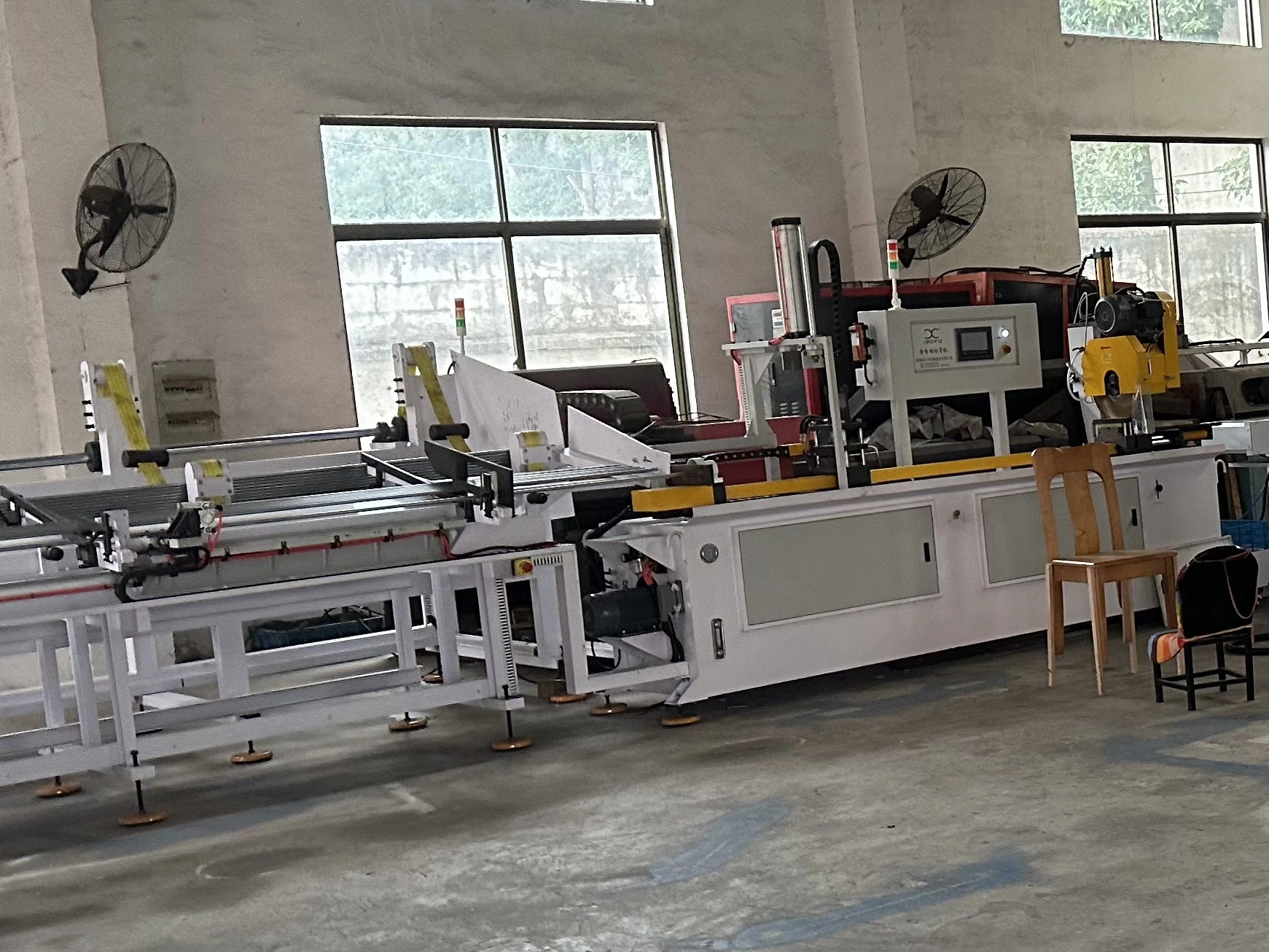
Core Selection Criteria
1. Dimensions Before & After Forming
Dimensional data of raw tube and finished tube end is the primary basis for model selection and die design.
- Pre‑forming raw tube data: Outer Diameter (OD), Wall Thickness (WT), tube material (carbon steel, stainless steel, aluminum, copper, alloy, etc.), tube straightness and cutting quality. Tube ends must be chamfered and deburred before forming.
- Post‑forming target data: Finished OD / ID of tube end, axial length of deformed section, deformation ratio.
Key note: Excessive single‑step deformation will cause cracking or wrinkling. Heavy deformation requires multi‑station progressive forming.
- Maximum overall tube length: Determines machine bed size, clamping stroke and workpiece discharging space.
Suggestion: Prepare a 2D drawing marked with raw tube and finished end dimensions for manufacturer evaluation.
2. Number of Forming Stations
Station quantity defines how many forming operations can be completed in one clamping cycle without manual die change.
- Single‑station pipe end former: Only one set of die can be installed. Completes one forming operation per cycle. Suitable for simple single‑process workpieces (only shrinking / expanding), low & medium batch production, frequent model changeover. Advantages: Lower cost, simple setup. Disadvantages: Manual die replacement required for multi‑step forming.
- Multi‑station pipe end former (2/3/4/6 stations): Turret/slide platform carries multiple die sets. The machine automatically switches stations to finish sequential forming within one clamping. Suitable for workpieces needing progressive forming or combined processes (e.g. chamfer → 1st shrink → 2nd shrink → beading). Ideal for large‑deformation parts which cannot be finished in one hit. Advantages: No manual die swap during production, high efficiency and stable product consistency. Disadvantages: Higher equipment investment.
Tip: Select stations strictly according to your process flow; do not blindly purchase extra unused stations.
3. Production Output & Cycle Time
Estimate required capacity to confirm machine tonnage, servo configuration and automation options.
- Required output: Pieces per hour / per 8‑hour shift / per day.
- Machine cycle time (including clamping, forming, die retraction and unloading):
- Single station: 3–8 seconds per piece (varies by travel and tonnage).
- Multi station: 4–12 seconds per piece (more stations slightly extends cycle time).
- Feeding type
- Manual feeding: Operator loads tubes manually, fits low & medium batch.
- Robot / auto magazine feeding: For mass high‑volume production. Machine needs reserved IO signal handshake interface.
4. Other Key Selection Factors
- Machine Tonnage: Calculated by tube OD, wall thickness, material yield strength and deformation ratio. Insufficient tonnage leads to incomplete forming.
- Clamping Range: The clamping capacity must cover the outer diameter of raw tube.
- Mandrel Requirement: Internal mandrel is necessary for thin‑wall tube expanding/flaring to prevent collapsing and wrinkling.
-
Control Mode
- Hydraulic NC: Cost‑effective for stable mass production with rare product changeover.
- CNC Servo: Precise position control, fast parameter adjustment, suitable for frequent model switching and future automation upgrade.
- Automation Expandability: If robot loading is planned later, choose CNC models with reserved IO interface.
5. Common Selection Mistakes
- Only check machine max OD capacity while ignoring wall thickness, material and deformation ratio.
- Purchase multi‑station machine for single forming process, resulting in unnecessary extra cost.
- Expect heavy deformation finished parts on a single‑station machine beyond deformation limit.
- Skip pre‑processing: Burrs without chamfering will trigger tube cracking during forming.
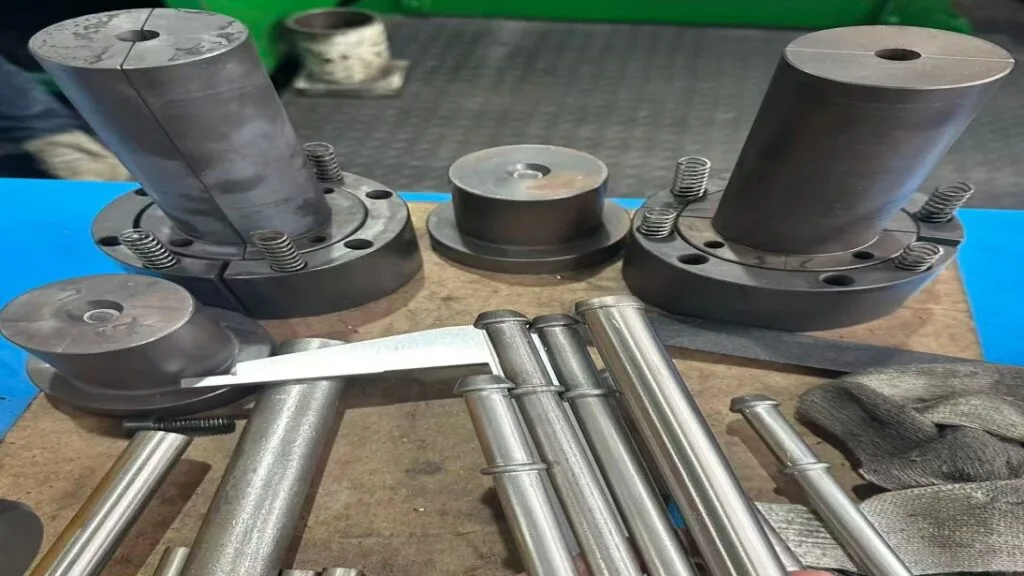
Q1: What dimensional information should I provide for machine selection?
A: Raw tube OD, wall thickness, material; target finished end dimensions, axial forming length, max total tube length, plus 2D drawing of finished tube end.
Q2: What is deformation ratio and why it matters?
A: Deformation ratio refers to the percentage of diameter change during shrinking or expanding. Too large single-step deformation causes cracking or wrinkling. Large deformation must adopt multi-station progressive forming.
Q3: Single station vs multi station, how many stations do I need?
A: Pick single station if you only need one forming operation for low/medium batches. Choose multi-station machine when sequential multi-step forming or large progressive deformation is required. Avoid redundant stations you will never use.
Q4: Does more stations equal better machine performance?
A: No. More stations raise purchase cost. Station quantity should match your actual process, extra unused stations are wasted investment.
Q5: How to calculate real production capacity?
A: Calculate based on machine cycle time plus loading/unloading time. Single station: ~3–8s/pc; multi station: ~4–12s/pc. Manual feeding reduces actual hourly output below theoretical cycle value.
Q6: My workpiece requires two-step progressive shrinking, can I use single-station machine?
A: Technically feasible, but manual die change and re-clamping for the second forming is required. It reduces efficiency and consistency. Multi-station model is recommended for mass production.
Q7: Tube OD matches machine specification, why wall thickness is still important?
A: Thicker wall or high-strength material needs higher tonnage. Thin-wall tubes of the same OD may need mandrel support to avoid collapse. Never select machine only by outer diameter.
Q8: Can I skip chamfering and deburring before tube end forming?
A: Not recommended. Sharp burrs become crack initiation points during cold forming and scratch forming dies. Chamfering and deburring is mandatory pre-processing.
Q9: What is the difference between hydraulic NC and CNC servo pipe end forming machine?
A: Hydraulic NC is economical for stable mass production with rare product changeover. CNC servo delivers precise positioning and quick parameter adjustment, ideal for frequent part switching and automation integration.
Q10: Can I retrofit robot automatic feeding to existing pipe end forming machine later?
A: Only CNC versions with reserved IO signal handshake interface support robot connection. Basic hydraulic NC single-station models generally cannot be retrofitted.
Q11: What configuration is needed for thin-wall tube expanding?
A: The machine must support installation of internal supporting mandrel. Mandrel is essential to prevent tube end wrinkling and collapse during expanding or flaring of thin-wall tubing.
Q12: Should pipe end forming be done before or after pipe bending?
A: Best practice: Complete pipe end forming before pipe bending. Bent tube geometry may block dies or mandrels accessing tube opening. Custom special fixtures are required if forming after bending is unavoidable.