Overview
This full comparison covers working principle, cutting quality, precision, material adaptability, production efficiency, labor cost, consumables, failure rate, total ownership cost (TCO), and industrial application scenarios, serving for customer technical consultation, quotation scheme matching, and product detail page content.
- Core Working Principle & Mechanical Logic
1.1 Pipe Sawing Machine (Cold Circular Pipe Saw)
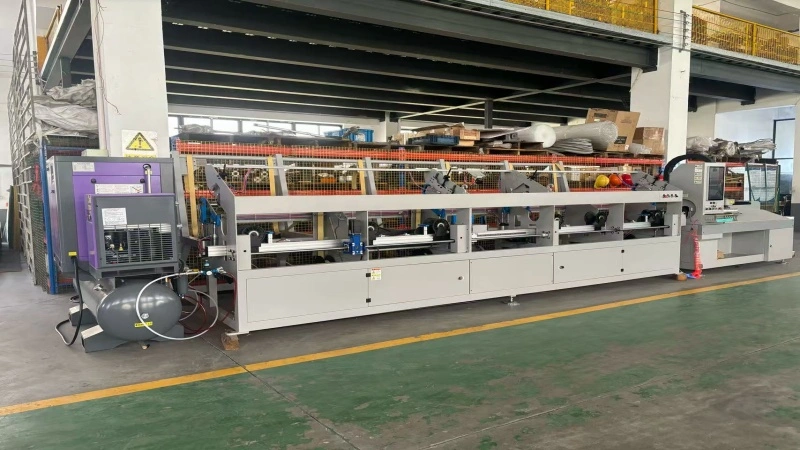
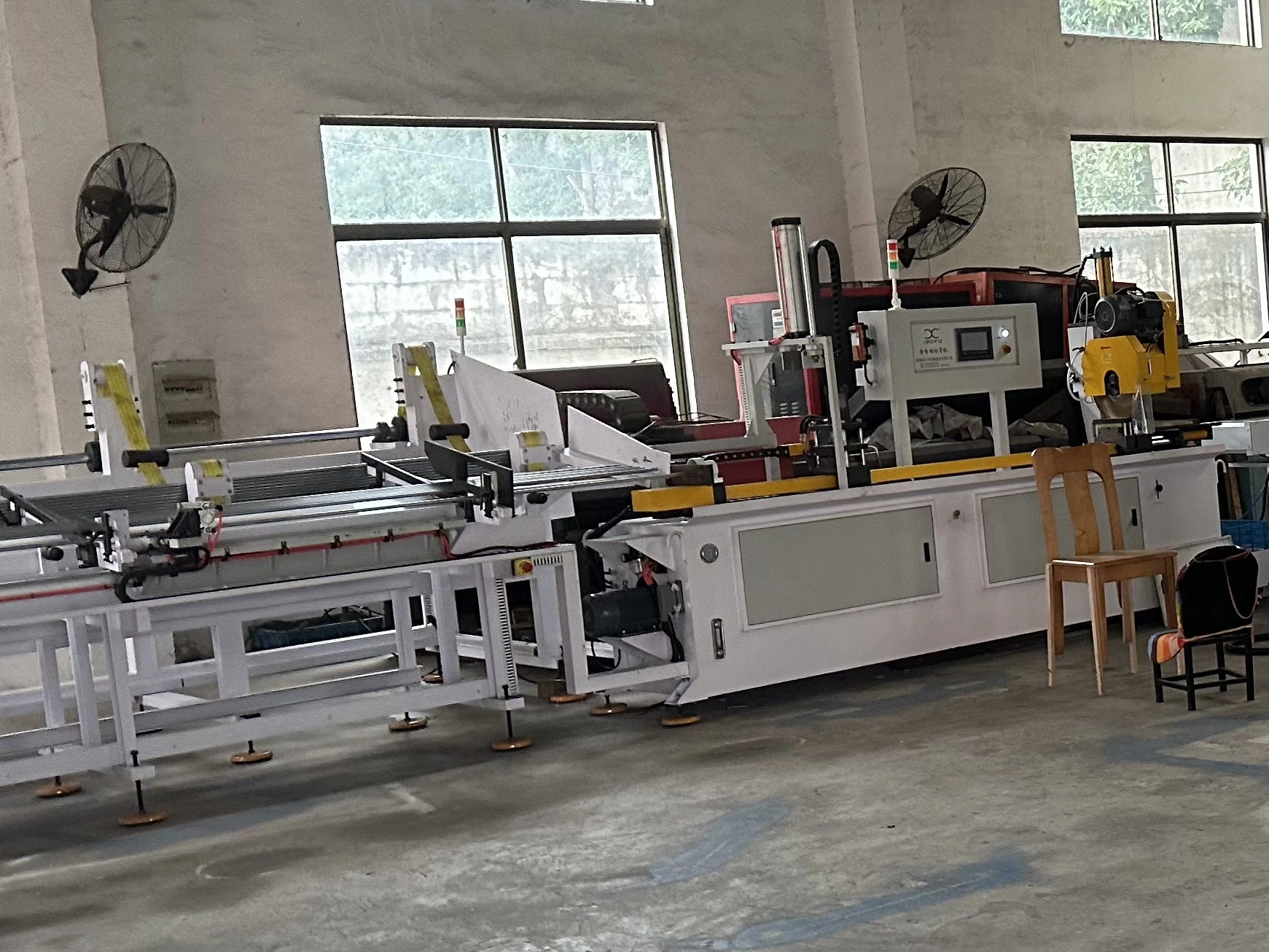
Pipe sawing is a traditional mechanical contact cutting process. It relies on a high-speed rotating carbide circular saw blade to physically shear, extrude and cut off metal pipes. Most industrial models adopt cold sawing technology, which uses coolant to take away cutting heat to avoid pipe end blackening and high-temperature deformation.
The whole cutting process belongs to rigid contact processing: the saw blade directly bears cutting resistance, mechanical vibration and friction impact. The equipment structure is mechanical transmission dominated by gear box, feeding cylinder and fixed fixture, with simple electrical control logic.
1.2 Pipe Laser Cutting Machine (CNC Tube Laser Cutter)
Laser pipe cutting is a non-contact thermal cutting process. It generates high-energy focused laser beam through laser generator, melts and vaporizes local metal of the pipe surface instantly. Assisted by high-pressure oxygen/nitrogen gas blowing away molten slag, it completes cutting, perforating and grooving.
Equipped with full CNC servo control system, automatic rotary chuck and intelligent feeding system, the equipment realizes synchronous linkage of pipe rotation, beam movement and cutting speed. No rigid contact force is generated during the whole processing.
- Cutting Function & Process Capability (Core Difference)
- Only supports conventional processing: straight vertical cutting, fixed-angle bevel cutting (45°/30° fixed angle only)
- No secondary forming process available: cannot punch holes, slot, cut arc, cut intersecting lines, or process special-shaped notches
- Single processing mode: only full-section pipe cutoff, unable to do partial cutting or local hollowing
- Angle limitation: flexible arbitrary angle cutting is unavailable, customized special bevels cannot be realized
2.2 Pipe Laser Cutting Machine
- All-in-one multi-functional processing: straight cut, arbitrary angle bevel cut (0°–180° free switching), round/square/oval hole punching, long slot cutting, arc cutting
- Special pipe joint processing: perfect cutting of intersecting lines for pipe-to-pipe vertical crossing, diagonal crossing and three-way crossing, which is essential for pipeline engineering and structural pipe parts
- Complex contour customization: can process irregular notches, end face profiling and pattern cutting according to CAD drawings
- One-time forming: all hole positions, grooves and end face forming are completed in one clamping without secondary positioning
- Cutting Precision, Edge Quality & Post-Processing
3.1 Dimensional Precision
- Pipe Sawing: Tolerance ±0.1mm ~ ±0.5mm. Affected by mechanical vibration, saw blade swing and pipe extrusion, the length error fluctuates greatly in mass production. The longer the pipe, the more obvious the cumulative error.
- Pipe Laser Cutting: Tolerance ±0.02mm ~ ±0.05mm. Full servo closed-loop control, no mechanical vibration interference, stable repeated positioning accuracy, zero cumulative error for long-batch processing, fully meets high-precision assembly tolerance standards.
3.2 Section & Edge Quality
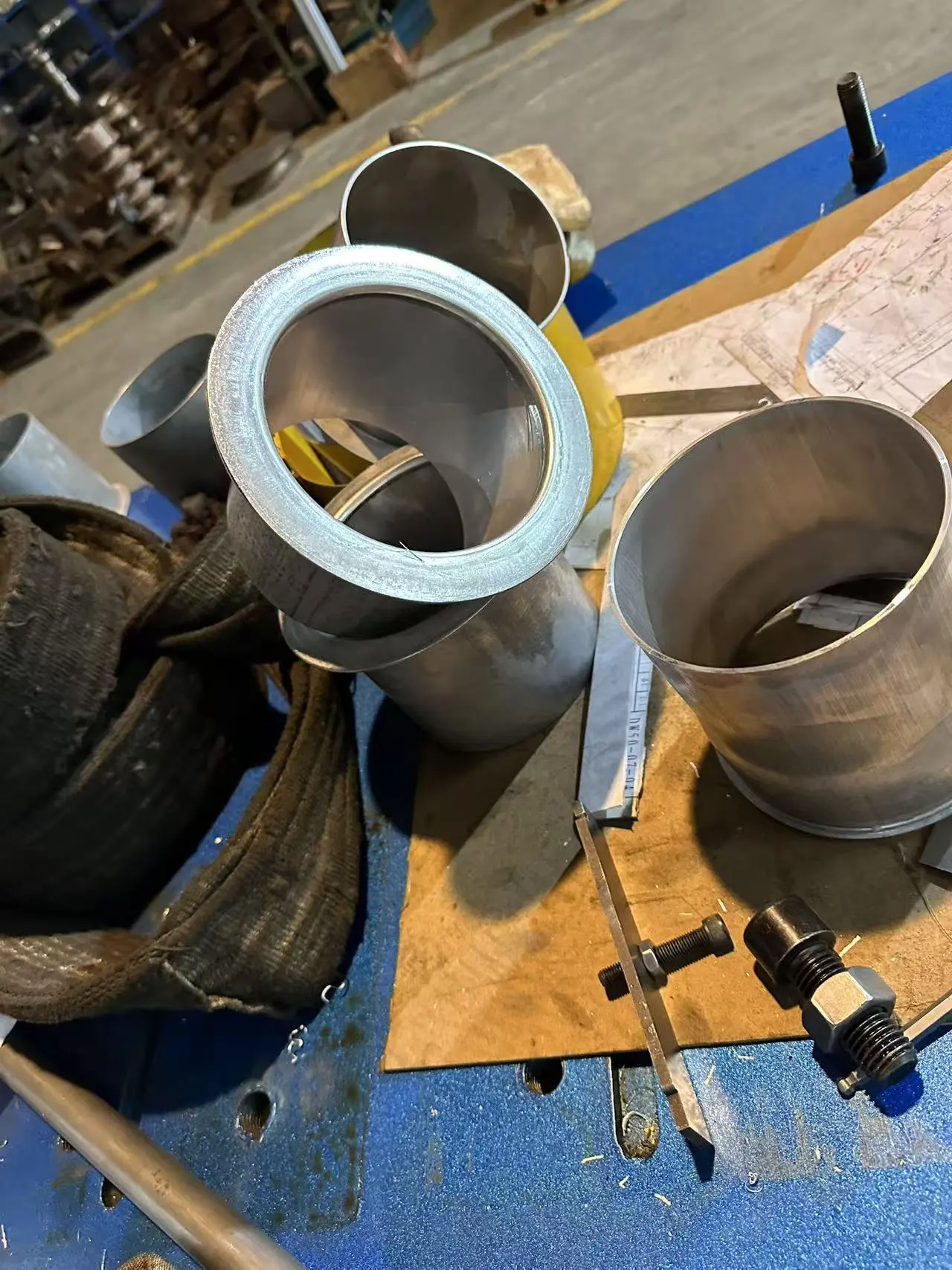
- Pipe Sawing: Obvious physical shear traces on the cutting surface, burrs and sharp edges on inner and outer walls, tiny metal burrs and chips remain at the pipe mouth. The section is rough with poor flatness, and slight end face collapse may occur on thin-walled pipes.
- Pipe Laser Cutting: Smooth and flat cutting section, no burrs, no collapse, no scratch. The cutting gap is uniform, the heat-affected zone is extremely small, and the end face does not blacken or harden. The finished pipe can be directly used for welding and assembly without polishing.
3.3 Post-Processing Workload
- Pipe Sawing: 100% required secondary processing. Must configure deburring machine, grinding machine or manual polishing to remove burrs and smooth the end face, otherwise it will affect pipe assembly and welding quality.
- Pipe Laser Cutting: Almost zero post-processing. Individual thick-wall pipe tiny slag can be removed by simple air blowing, no manual grinding and polishing needed, directly weldable and installable.
- Kerf Loss & Material Utilization Rate
Pipe Sawing
The kerf depends on the thickness of the carbide saw blade (conventional blade thickness 1.2mm–3mm). The thicker the blade, the larger the cutting loss. A large amount of metal chip waste is generated during cutting, with material utilization rate of only 88%–92%. Long-term mass production will produce huge material cost loss.
Pipe Laser Cutting
Ultra-thin laser beam kerf (0.1mm–0.3mm), almost negligible material loss. No metal chip waste, high-density nested cutting can be carried out according to pipe length, and the material utilization rate is as high as 97%–99%, which greatly saves raw material costs for high-priced alloy steel, stainless steel and aluminum pipes.
- Production Efficiency & Automation Level
5.1 Batch Efficiency
- Pipe Sawing: Fast single cutting speed for simple short pipe cutoff, but low comprehensive efficiency. Frequent shutdowns are required to replace saw blades, clean chips and calibrate fixtures. The beat is unstable in long-term production.
- Pipe Laser Cutting: Slightly slower single straight cutting for super simple short pipes, but ultra-high comprehensive efficiency for complex parts. It integrates cutting, punching and grooving into one process, omitting multiple secondary processes, and the overall production capacity is 3–8 times that of sawing process for complex pipe workpieces.
5.2 Automation & Labor Dependence
- Pipe Sawing: Most semi-automatic models require manual feeding, discharging and sorting. Fully automatic sawing machines can only realize fixed-length repetitive cutting with poor flexibility. Each production line needs 1–2 workers for deburring and inspection.
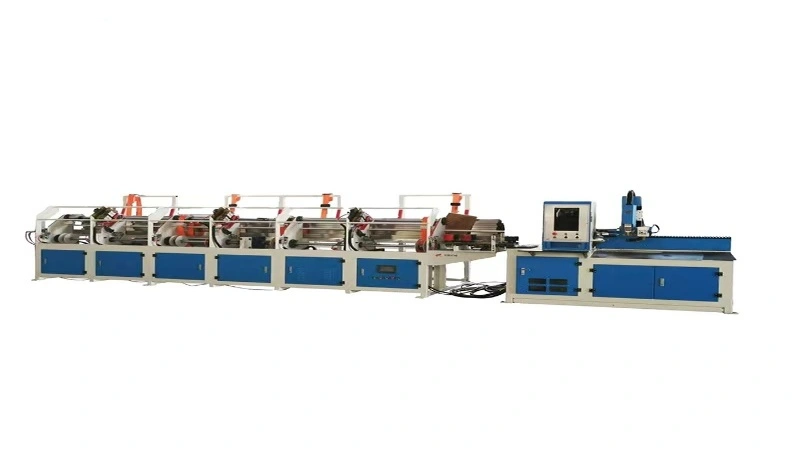
- Pipe Laser Cutting: Full automatic loading, feeding, positioning, cutting and unloading. Intelligent material nesting, automatic error correction and batch parameter storage. One worker can manage 2–3 equipment, realizing unmanned batch production. It can be seamlessly connected with bending machines, punching machines and assembly lines to form a fully automatic pipe processing production line.
- Adaptability of Pipe Material & Specification
6.1 Pipe Wall Thickness
- Pipe Sawing: Superior for super thick-walled pipes (wall thickness ≥10mm). Mechanical shear force is strong, stable cutting, no burning and melting defect problems.
- Pipe Laser Cutting: Suitable for thin-walled and medium-thick pipes (wall thickness 0.5mm–12mm). For ultra-thin-walled pipes (0.5mm–3mm), it completely avoids pipe extrusion deformation caused by saw blade clamping and cutting, with better forming effect.
6.2 Pipe Material Type
- Pipe Sawing: Suitable for carbon steel, thick stainless steel, alloy steel, copper and iron pipes. Poor processing effect on thin stainless steel and aluminum alloy pipes, prone to deformation and burrs.
- Pipe Laser Cutting: Compatible with all metal pipes: carbon steel, stainless steel, aluminum alloy, copper, brass, galvanized pipe, profile pipe, special alloy pipe, with strong material universality.
6.3 Pipe Shape
- Pipe Sawing: Only for round pipes, square pipes and rectangular conventional profiles. Unable to process special-shaped pipes.
- Pipe Laser Cutting: Supports round pipe, square pipe, rectangular pipe, elliptical pipe, I-beam, channel steel and various custom special-shaped pipes.
- Consumables, Maintenance & Failure Rate
7.1 Consumable Cost & Cycle
Pipe Sawing
- Core consumables: Carbide saw blade (wears fast), cutting coolant, lubricating oil
- Replacement cycle: Saw blade needs sharpening every 3–7 days, replaced in 1–3 months in mass production
- Features: Frequent consumable replacement, high recurring annual cost, large consumption of coolant, easy to pollute workpieces
Pipe Laser Cutting
- Core consumables: Protective lens, cutting nozzle, auxiliary gas (oxygen/nitrogen)
- Replacement cycle: Lens/nozzle replaced every 1–3 months, no wearing cutting tools
- Features: No mechanical wearing parts, stable consumable cost, clean processing without pollution
7.2 Maintenance & Failure Rate
- Pipe Sawing: Complex mechanical transmission structure, gear and bearing wear easily. Long-term vibration causes fixture deviation and cutting error. High failure rate, frequent daily maintenance, need regular calibration and lubrication.
- Pipe Laser Cutting: Few mechanical moving parts, stable servo system, no rigid collision wear. Low failure rate, simple daily maintenance (clean lens, clean dust), long service life (8–10 years stable operation).
- Investment Cost & Long-Term TCO (Total Cost of Ownership)
8.1 Upfront Purchase Cost
- Pipe Sawing Machine: Low initial investment, suitable for small budget and entry-level production
- Pipe Laser Cutting Machine: High one-time purchase cost, high equipment threshold
8.2 Long-Term Comprehensive Cost
- Pipe Sawing: Low machine price + high later cost (frequent blade replacement + labor cost for deburring + material waste cost + high maintenance cost). The annual comprehensive operating cost is high.
- Pipe Laser Cutting: High machine price + ultra-low later cost (almost no post-processing labor + minimal material waste + low failure maintenance + less consumable loss). For medium and long-term mass production, the comprehensive cost is far lower than sawing process, and the cost can be recovered in 1–2 years for large batches.
- Defect Risk & Product Yield
Pipe Sawing
Common defects: pipe end deformation, burr residue, uneven section, length out of tolerance, saw blade scratch. Affected by manual operation and tool wear, the defective rate is about 3%–8% in mass production.
Pipe Laser Cutting
Stable CNC program processing, no manual interference errors. No deformation, scratch or dimensional deviation. The defective rate is controlled within 0.5%, with extremely high finished product yield.
- Exact Application Scenarios Selection
Choose Pipe Sawing Machine If You Meet The Below Conditions
- Only need simple fixed-length cutoff of pipes, no punching, grooving and complex joint processing
- Mainly process thick-walled carbon steel pipes with low requirements on end face finish
- Small-batch, diversified sporadic orders with limited upfront equipment budget
- Subsequent equipped with independent professional deburring and polishing process
Choose Pipe Laser Cutting Machine If You Meet The Below Conditions
- Need integrated processing of cutting, punching, slotting and intersecting line cutting for pipe parts
- Process thin-walled stainless steel, aluminum alloy and high-grade alloy pipes requiring no deformation
- High requirements on welding assembly precision and end face flatness, need zero-burr direct forming
- Large-scale mass production, pursue high yield, low material waste and unmanned automated production
- Products applied in high-end fields: automobile pipe fittings, hydraulic equipment, fitness equipment, pipeline engineering, construction steel structures
- Final Summary
There is no absolute superiority or inferiority between pipe sawing and pipe laser cutting, only suitability for production demands.
- Pipe sawing is a cost-effective solution for simple thick-wall pipe cutoff, suitable for low-precision and low-budget processing scenarios.
- Pipe laser cutting is a high-efficiency, high-precision and low-consumption integrated processing solution, which solves the pain points of multiple secondary processes, large material loss and unstable quality of traditional sawing, and is the mainstream upgrading direction of modern metal pipe processing
| العنصر | آلة قطع الأنابيب | Pipe Laser Cutting Machine |
|---|---|---|
| Cutting Principle | Mechanical cutting by carbide saw blade | CNC laser beam melting & vaporizing material, assisted by high‑pressure gas |
| Processing Capacity | Mainly straight cut & fixed‑angle bevel cut; no hole / slot / complex contour processing | Straight cut, bevel, hole, slot, intersecting line, complex shape in one pass |
| Cutting Precision | ±0.1~0.5 mm; burrs & chips formed, deburring required | ±0.05 mm or better; smooth weld‑ready edge, minimal secondary finishing |
| Kerf & Material Loss | Wide kerf caused by saw‑blade thickness, higher material waste | Ultra‑narrow kerf, higher material utilization rate |
| Upfront Cost | Low‑medium investment | High initial investment |
| Running Consumables | Saw‑blade replacement, coolant; recurring blade cost | Assist gas, protective lens; no mechanical cutting blade wear |
| Suitable Scenarios | Simple‑length cutoff, thick‑wall tube, limited‑budget mass cutting, simple‑requirement end face | High‑precision parts, complex tube geometry, thin‑wall tube, high‑end automotive / hydraulic pipe batches |
| Automation | Can equip auto‑feeding, limited flexible function | High‑level CNC automation, easy to integrate into full production line |