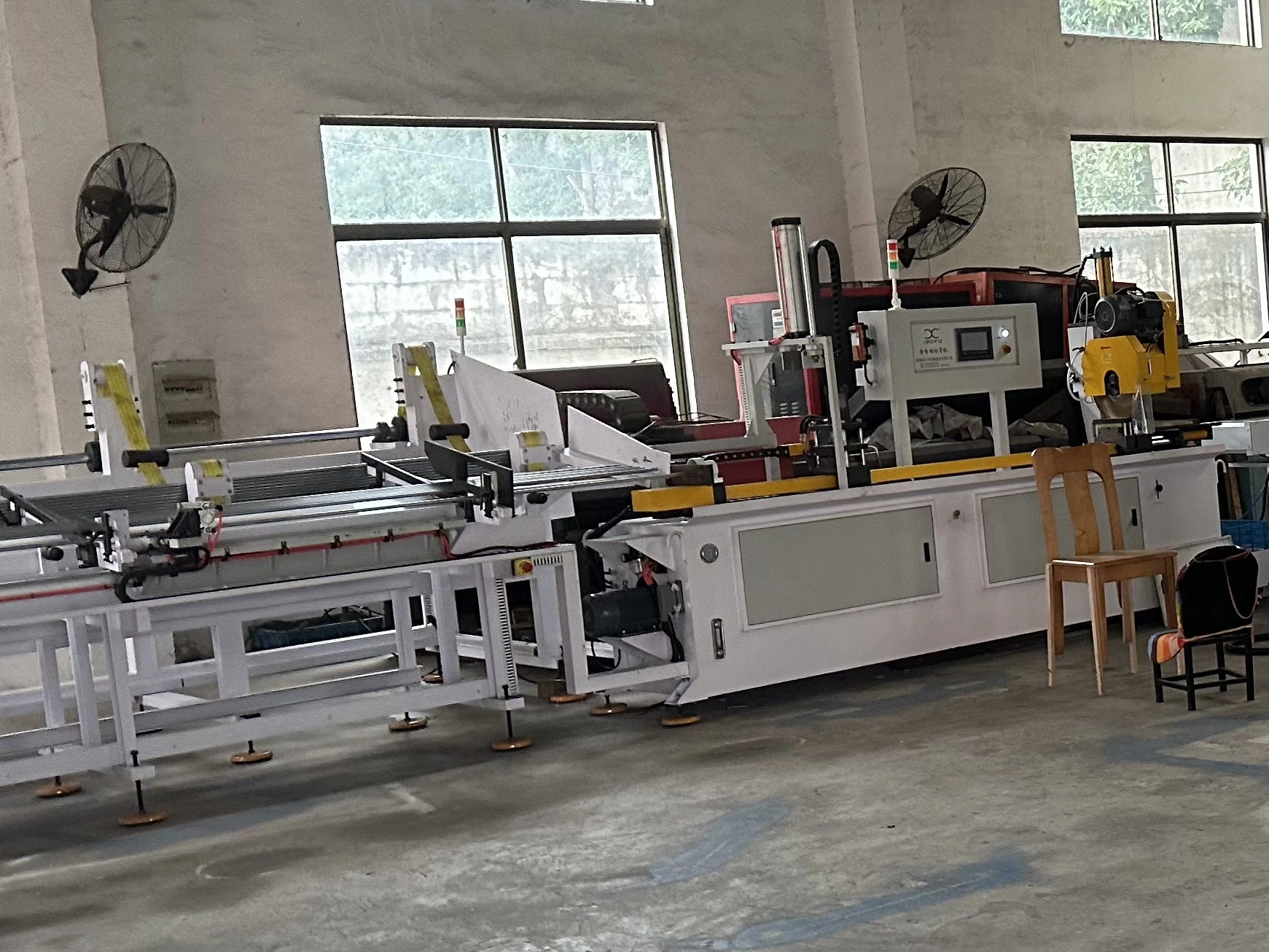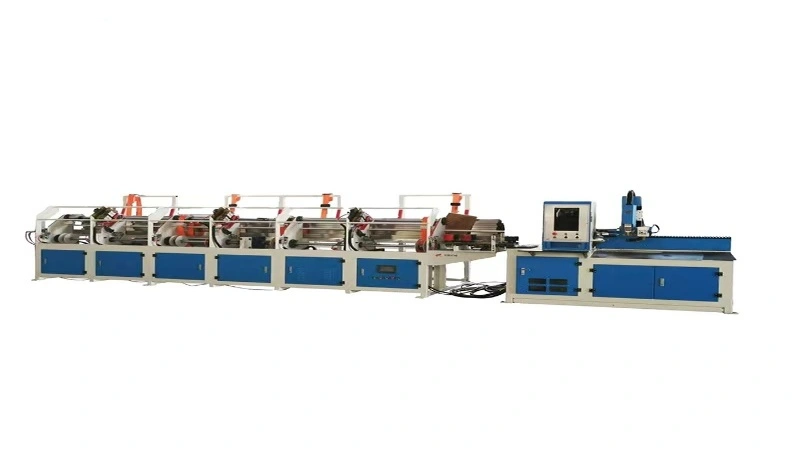
Pipe end forming machine (tube end former) performs cold plastic deformation on tube open ends. To select the correct model, you need to confirm pre‑forming tube dimension, required post‑forming size, number of forming stations, expected production output, material and forming process. Wrong selection will lead to cracking, wrinkling, insufficient tonnage or low production efficiency.
Mechanical Characteristics
- Microcomputer control with hydraulic drive for stable operation.
- Movable foot pedal switch, featuring 3 functions: automatic start, emergency pause and emergency stop, delivering high safety performance.
- Capable of multiple forming processes including pipe shrinking, pipe expanding and tube upsetting. It is an ideal machine for tube end forming.
- Quick and simple mould replacement, suitable for flexible production.
Technical Parameters
| Model | PS38 | PS60 | PS80 | PS114 | PS130 | PS160 | PS219 |
|---|---|---|---|---|---|---|---|
| Max. shrinkage capacity (mm) | Φ38*2 | Φ60*2 | Φ80*2 | Φ110*2 | Φ130*3 | Φ160*4 | Φ219*6 |
| Max. shrinkage stroke (mm) | 110 | 130 | 160 | 160 | 170 | 180 | 220 |
| Single shrinkage time (s) | 4~6 | 5~10 | 8~15 | — | — | — | — |
| Clamping stroke | 70 | 80 | 85 | — | — | — | — |
| Die change stroke | 90 | 110 | 135 | — | — | — | — |
| Control power supply(V) | 110 | 110 | 110 | 110 | 110 | 110 | 110 |
| Max. motor power (kW) | 4 | 5.5 | 5.5 | 7.5 | 11 | 15 | 22 |
| Max. tube shrinkage rate (mm/sec) | 110/1.5 | — | — | — | — | 180/12 | — |
| Motor | Y112M-4 4KW | Y132S-4 5.5KW | Y132S-4 5.5KW | Y132S-4 7.5KW | Y132S-4 11KW | Y132S-4 15KW | Y132S-4 22KW |
| Oil pump displacement (L/min) | P214PR01D1DT | P219PR01DT | P219PR01DT | — | — | — | — |
| System pressure (Mpa) | 12 | 12 | 12 | 15 | 15 | — | — |
| Oil pump displacement (L/min) | 14 | 19 | 19 | 22 | 22 | — | — |
| Fuel tank capacity(L) | 90 | 100 | 110 | — | — | — | — |
| Oil quality | 32# anti-wear hydraulic oil (Winter)46# anti-wear hydraulic oil (Summer) | 32# anti-wear hydraulic oil (Winter)46# anti-wear hydraulic oil (Summer) | 32# anti-wear hydraulic oil (Winter)46# anti-wear hydraulic oil (Summer) | 32# anti-wear hydraulic oil (Winter)46# anti-wear hydraulic oil (Summer) | 32# anti-wear hydraulic oil (Winter)46# anti-wear hydraulic oil (Summer) | 32# anti-wear hydraulic oil (Winter)46# anti-wear hydraulic oil (Summer) | 32# anti-wear hydraulic oil (Winter)46# anti-wear hydraulic oil (Summer) |
| Dimensions(LWH)(mm) | 33007001360 | 30007501360 | 31008001400 | 33008001500 | 40008501700 | 60009501800 | — |
| Weight (kg) | — | 1190 | 1500 | 1600 | 1800 | 2300 | 3000 |
1. Confirm Pipe Dimensions: Pre‑forming VS Post‑forming
-
Pre‑forming raw tube parameters
- Raw tube outer diameter (OD), wall thickness (WT)
- Tube material: carbon steel, stainless steel, aluminum, copper, alloy etc.
- Straightness & cutting quality: tube end must be chamfered and deburred before forming.
-
Post‑forming target dimension
- After‑forming OD / ID of the end profile (shrunk / expanded / flared / bead / closed size)
- Forming length: the axial length of deformed section on pipe end
- Deformation ratio: percentage of diameter change. Important rule: Too large one‑step deformation ratio causes cracking or wrinkling. Large deformation requires multi‑station progressive forming.
- Maximum tube overall length Defines machine bed size, clamping stroke and workpiece‑release space.
Catalogue note: Prepare simple 2D drawing showing raw tube dimension and finished end‑profile dimension for manufacturer evaluation.
2. Number of Forming Stations
The station quantity determines how many different end‑forming operations can be completed in one machine cycle without manual die change.
- Single‑station pipe end former
- Can install one set of forming die. Only one forming operation per cycle.
- Suitable: Simple single‑process workpieces (only shrinking OR only expanding). Low‑to‑medium output, frequent product change‑over.
- Advantage: Lower cost, simple setup.
- Disadvantage: Multiple forming steps need repeated manual die replacement.
- Multi‑station pipe end former (2‑station / 3‑station / 4‑station / 6‑station)
- Turret / slide platform carries several sets of dies; machine automatically shifts to next station. Complete multiple sequential forming steps in one clamping.
- Suitable: Parts requiring progressive forming, or mixed processes e.g. chamfer → first shrink → second shrink → bead. Large‑deformation workpieces that cannot finish in one hit.
- Advantage: No manual die swap inside production cycle, higher efficiency, consistent quality.
- Disadvantage: Higher machine investment.
Reminder: Station count is decided by your process flow, not blindly pursue more stations.
3. Production Output & Cycle Time
Calculate real required output to select hydraulic tonnage, servo configuration and automation option.
- Expected output: pieces per hour / per 8‑hour shift / per day.
-
Machine cycle time: total time including clamping → forming → die retract → unload.
- Single‑station: approx 3‑8 seconds per piece (depends on travel distance and tonnage).
- Multi‑station: approx 4‑12 seconds per piece (more stations = slightly longer cycle).
-
Manual feeding VS automatic / robot feeding
- Manual feeding: operator loads each tube. Fit for low‑medium batch.
- Robot / auto‑magazine feeding: for high‑volume mass‑production; machine reserves signal handshake interface.
4. Other Critical Selection Factors
- Machine Tonnage: Calculated from tube OD, wall thickness, material yield strength and deformation ratio. Insufficient tonnage results in incomplete forming.
- Clamping capacity: Clamping range must match raw tube outer diameter.
- Tooling & mandrel requirement: Thin‑wall tube expanding / flaring needs internal mandrel to avoid collapse and wrinkling.
-
Control mode:
- Hydraulic NC: economical for stable mass production.
- CNC servo: precise position control, easy parameter adjustment for frequent product change‑over.
- Automation expandability: If future robot loading is planned, choose CNC model with reserved IO signal interface.
5. Common Mistakes to Avoid
- Only look at max tube OD of machine, ignore wall thickness, material and actual deformation ratio.
- Buy multi‑station machine when only one forming step is needed, causing unnecessary over‑investment.
- Ignore deformation‑ratio limit, expect large‑deformation finished part on single‑station machine.
- Neglect pre‑processing: un‑chamfered burr‑covered tube end will cause forming crack.
FAQ — How to Choose a Pipe End Forming Machine
Q1: What dimensional data must I provide for pipe end‑former selection?
A: Pre‑forming raw tube OD, wall thickness, material; post‑forming target end dimension, deformed section axial length, max overall tube length, and 2D drawing of finished pipe end.
Q2: What is deformation ratio, why is it important?
A: Deformation ratio = percentage of diameter change during shrinking / expanding. Excessive single‑step deformation causes cracking or wrinkling. Large deformation must use multi‑station progressive forming.
Q3: Single‑station vs multi‑station, how do I choose station quantity?
A: Choose single‑station if you only need one forming operation (only shrink or only expand), low‑medium batch. Choose multi‑station when you need sequential multiple forming steps or large‑deformation progressive forming. Do not buy extra stations you will never use.
Q4: Does more stations mean better machine performance?
A: No. More stations raise purchase cost. Select station number strictly according to your actual process flow. Unnecessary stations are wasted investment.
Q5: How to estimate real machine output?
A: Calculate from machine cycle time plus operator loading‑unloading time. Single‑station ~3‑8 s/pc; multi‑station ~4‑12 s/pc. Manual feeding will reduce actual hourly output compared to theoretical cycle time.
Q6: My tube needs two‑step progressive shrinking, can I use single‑station machine?
A: Technically yes, but you must manually change die and re‑clamp tube for second hit. It lowers efficiency and consistency. Multi‑station machine is recommended for mass‑production.
Q7: Why wall thickness matters even if tube OD fits machine specification?
A: Thicker‑wall or high‑strength material requires higher machine tonnage. Same OD thin‑wall tube may need mandrel support to prevent collapse. Do not select only by outer diameter.
Q8: Can pipe end‑former work without chamfering / deburring before forming?
A: Not recommended. Sharp burrs act as crack initiation points, causing tube‑end cracking during cold forming, and also scratch forming dies. Chamfering & deburring is mandatory pre‑process.
Q9: What is the difference between hydraulic NC and CNC‑servo pipe end‑former?
A: Hydraulic‑NC is cost‑effective for stable mass‑production with seldom product change‑over. CNC‑servo offers precise position control, fast parameter adjustment, better for frequent part‑model switching and automation upgrade.
Q10: Can I add robot automatic feeding later on existing pipe end‑former?
A: Only if your machine is CNC version with reserved IO signal‑handshake interface. Basic hydraulic‑NC single‑station models generally cannot be retrofitted for robot connection.
Q11: Thin‑wall tube expanding process, what machine configuration shall I require?
A: Confirm machine can install internal supporting mandrel. Mandrel is essential to avoid tube‑end wrinkling and collapsing during expanding / flaring for thin‑wall tubing.
Q12: Should I complete pipe‑end‑forming before or after pipe bending?
A: Best practice: finish pipe‑end‑forming before pipe bending. After bending, complex workpiece shape may block die / mandrel access to tube opening. Special custom fixture is required if forming after bending cannot be avoided.