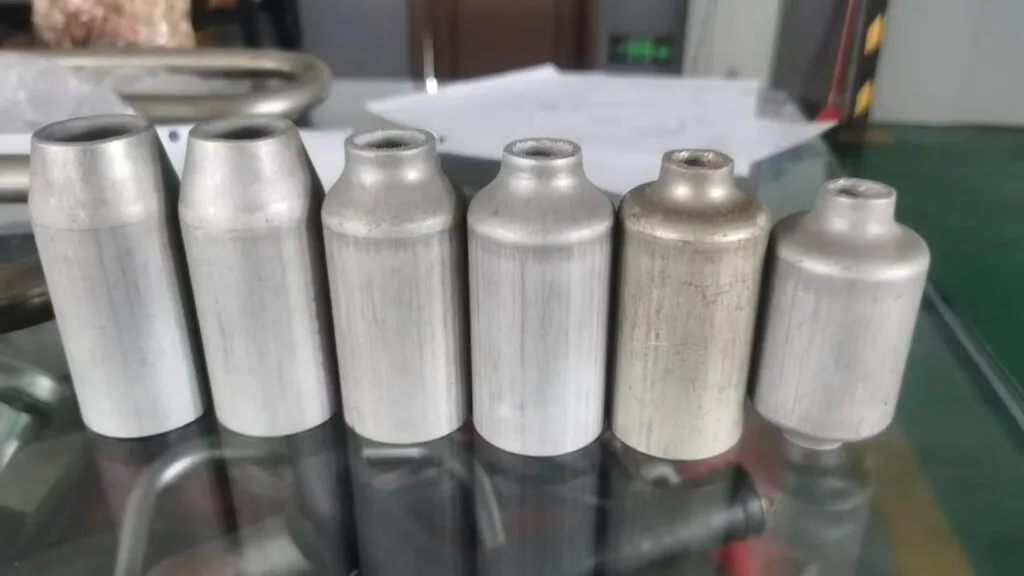
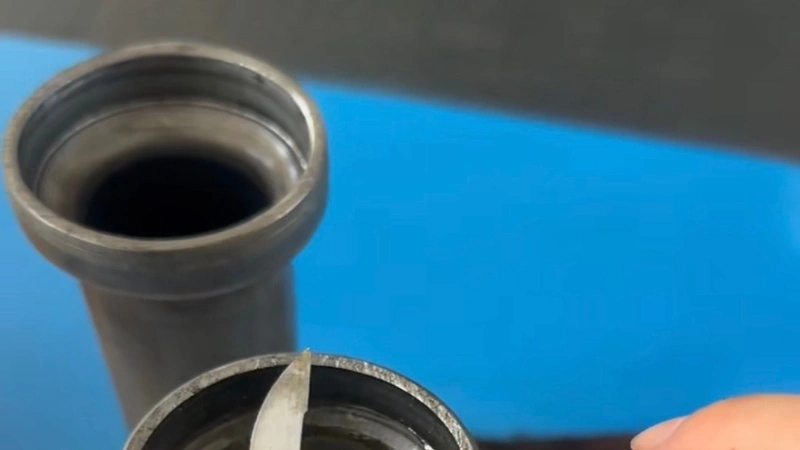
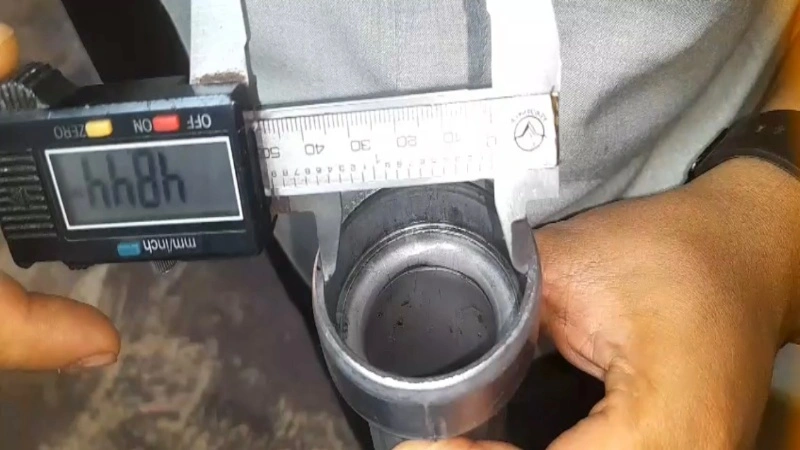
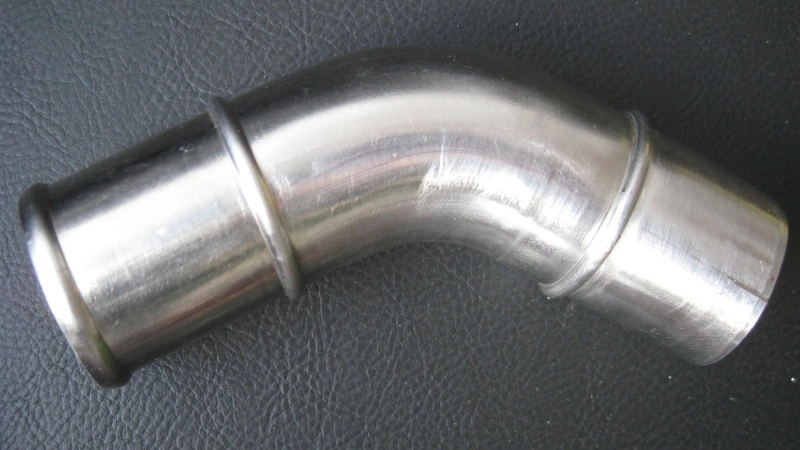
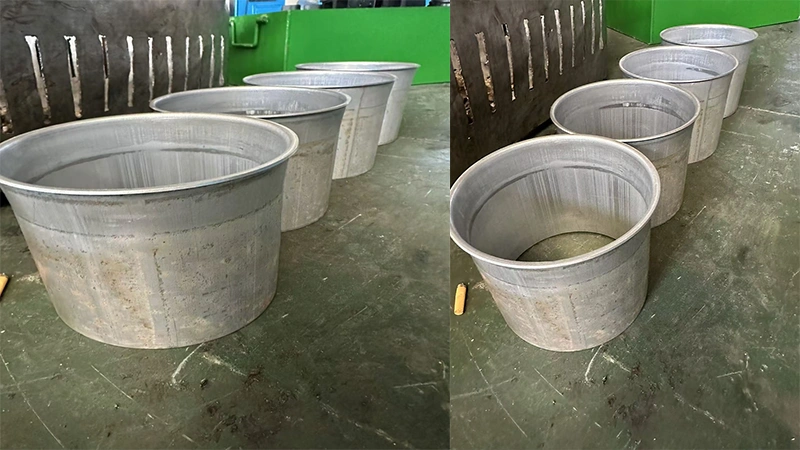
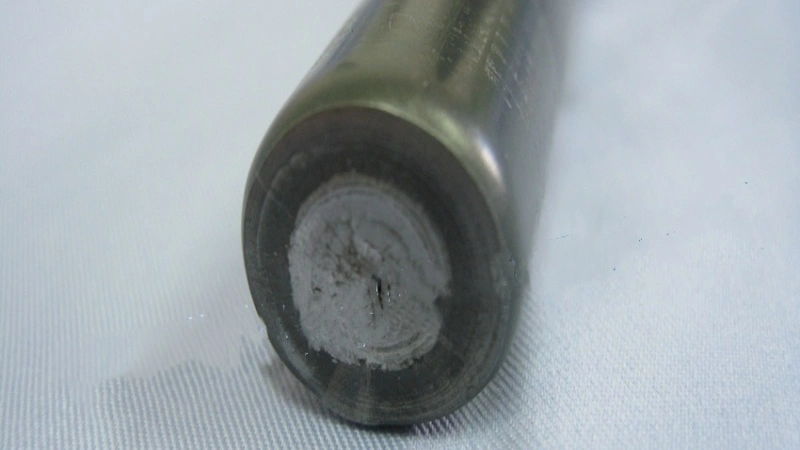
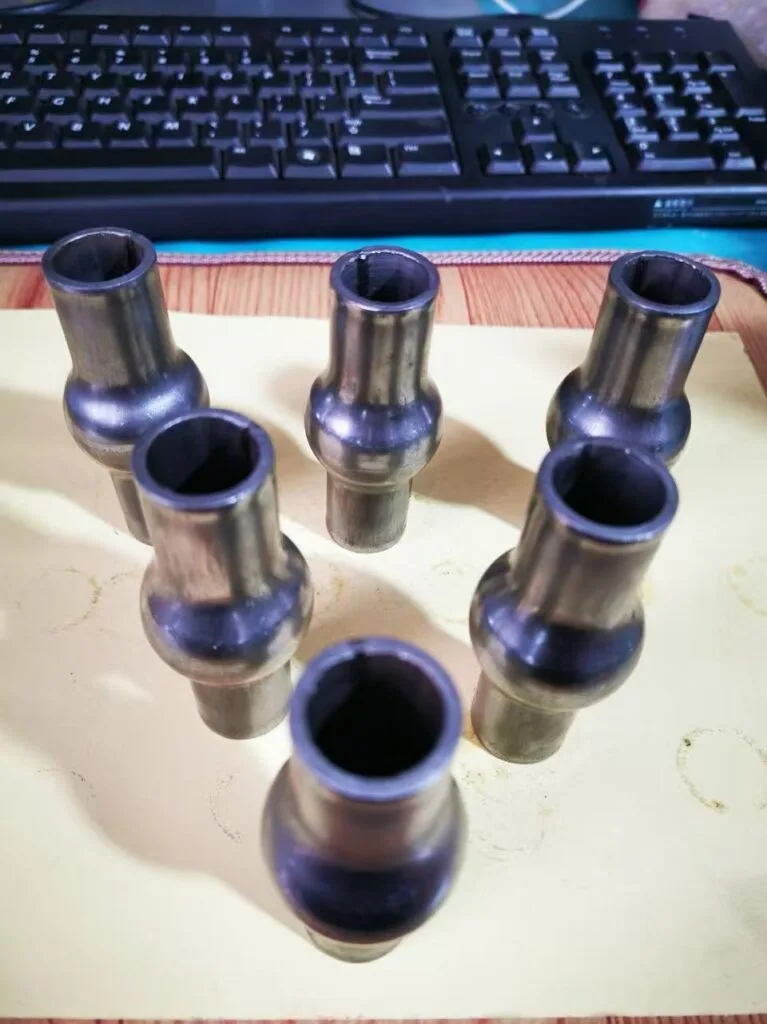
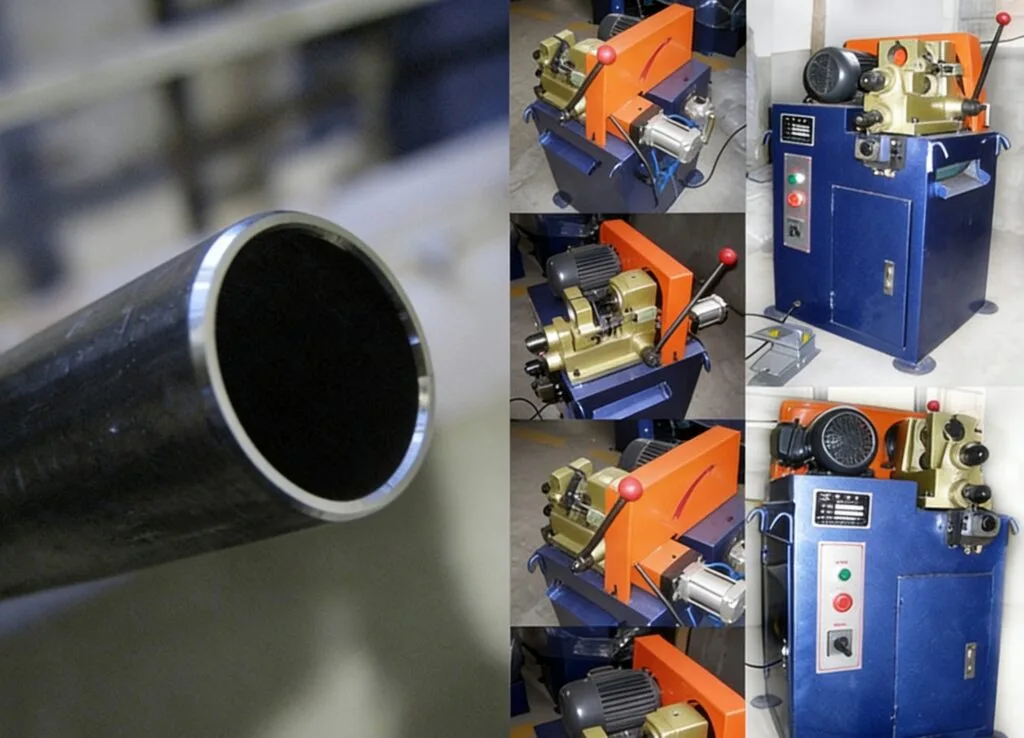
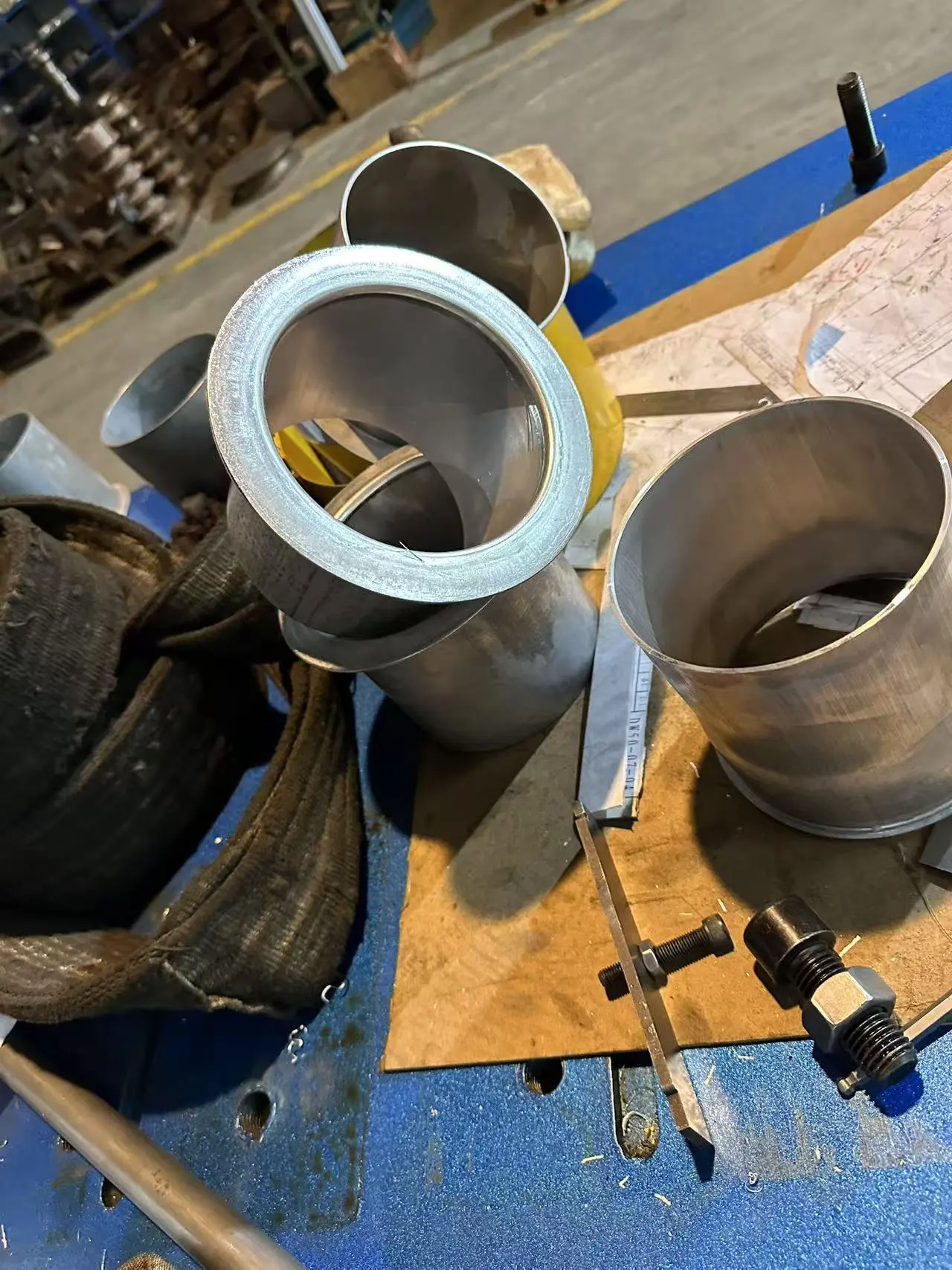
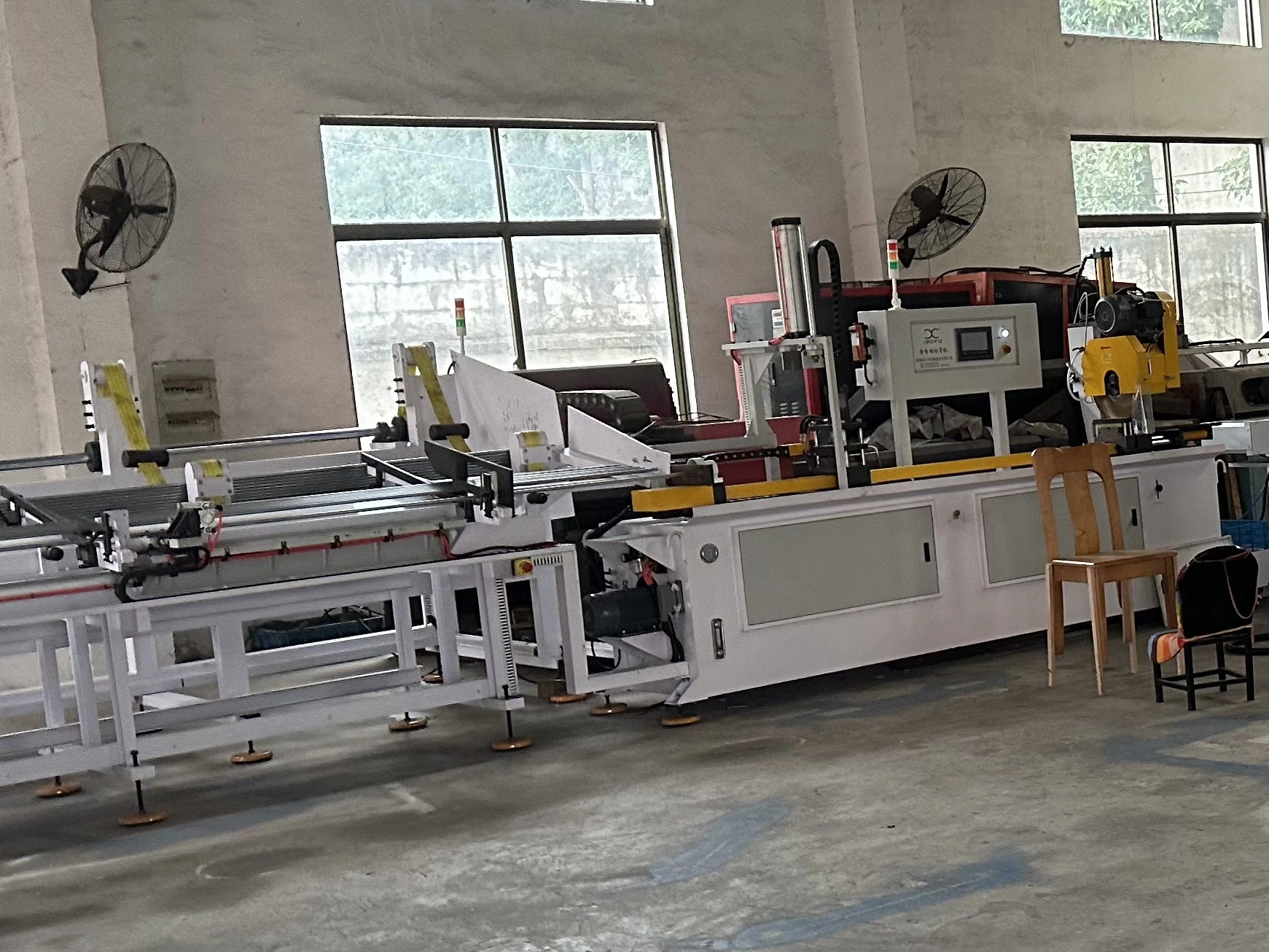
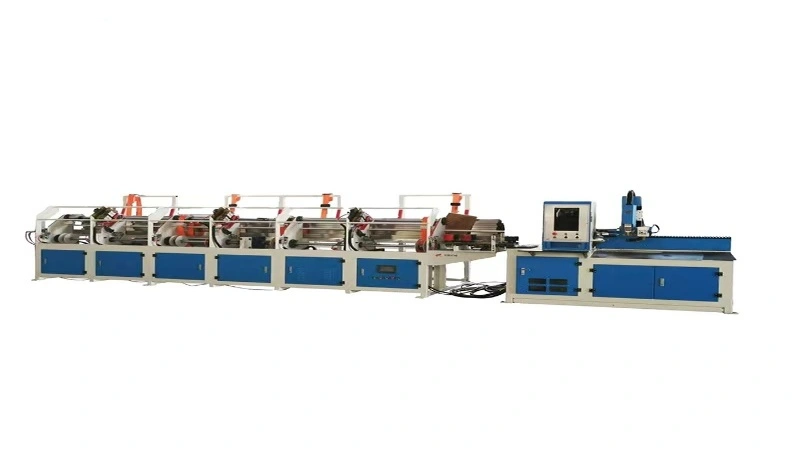
Pipe end forming (tube end forming) is a cold plastic‑deformation manufacturing process. Without chip‑removal cutting, hydraulic / servo‑driven dies reshape only the open end of metal pipe, to realize assembly, sealing, hose connection, welding or structural reinforcement.
Difference vs Pipe Bending: Pipe bending changes the pipe centre‑line geometry; pipe end forming only modifies local geometry at pipe open ends, leaving main pipe body unchanged.
Typical machine: Multi‑station hydraulic / CNC tube end former. Different forming dies are swapped to produce diverse end profiles.
Standard Working Sequence
Tube cutting & end chamfering
Precise clamping of tube body
Die forward stroke for cold forming
Die retraction
Unload finished tube, dimensional inspection
Main Pipe‑end‑forming Processes (Definition, Function, Typical Application)
Reducing / Swaging (Necking)
Definition: Radially compress pipe end to reduce outer‑diameter; wall thickness slightly increases after cold forming.
Function: For telescopic tube nesting, nozzle transition, insert‑fit assembly.
Q1: What is the difference between pipe end forming and pipe bending?
A: Pipe bending changes the spatial shape / centre‑line of whole tube. Pipe end forming only deforms the short open‑end section of tube; main tube body geometry stays unchanged.
Q2: Can one tube‑end‑former machine realize multiple different end shapes?
A: Yes. Change dedicated forming dies. Multi‑station CNC tube‑end‑former can finish several different forming operations in one single machine cycle without manual die swap.
Q3: Should I perform pipe‑end‑forming before or after pipe‑bending?
A: Best practice: do pipe‑end‑forming before bending. After bending, complex bent geometry may prevent die / mandrel from accessing tube opening. Special custom fixtures are required if forming must be done post‑bending.
Q4: Why does thin‑wall tube wrinkle or collapse during expanding / flaring?
Q5: What is the difference between flaring and beading?
A: Flaring: outward‑taper bell‑mouth on tube end for metal‑to‑metal face‑seal connection. Beading: circumferential raised ring bead on tube outer surface, used as a barb to lock rubber hoses.
Q6: Can pipe‑end‑forming replace welding for tube‑end sealing?
A: Yes for low‑pressure static application via end‑closing process. It forms mechanical cold‑formed seal without weld. Not suitable for high‑pressure dynamic fluid working conditions.
Q7: What limits maximum deformation for one‑hit forming?
A: Tube material ductility, original wall thickness, die geometry. Too‑large single‑step deformation will cause cracking or wrinkling; must split into multi‑station progressive forming.
Q8: Can square / rectangular profile tubes do pipe‑end‑forming?
A: Yes, but requires custom‑profiled forming dies. Standard dies are for round tubes only.
Q9: What pre‑processing is required before pipe‑end‑forming?
A: Tube must be cut to accurate length, plus inner & outer chamfer / deburr. Sharp burrs will damage dies and cause forming cracks.
Q10: Is pipe‑end‑forming hot‑working or cold‑working process?
A: Majority is cold forming (room‑temperature). Special hard‑to‑form alloy may adopt local heating hot‑end‑forming as alternative solution.
Q11: My parts require both pipe‑bending and pipe‑end‑forming, what production‑flow suggestion?
A: Recommended workflow: Cut tube → chamfer → pipe‑end‑forming → then pipe‑bending. If you reverse order (bend first then end‑form), you may face mandrel / die access difficulties.
Q12: Can pipe‑end‑forming machine work together with robotic automation cell?
A: Yes. CNC multi‑station tube‑end‑former can reserve signal‑handshake interface for robot loading‑unloading, integrated into full tube‑processing production line together with pipe‑bender & tube‑cutting machine.
Standard workflow: Chamfer & flatten tube port → Clamp tube → Die cold forming → Unload & dimension inspection
Core Selection Criteria 1. Dimensions Before & After Forming Dimensional data of raw tube and finished tube end is the primary basis for model selection and die design. Key note: Excessive single‑step deformation will cause cracking or wrinkling. Heavy deformation requires multi‑station progressive forming. Suggestion: Prepare a 2D drawing marked with raw tube and finished end dimensions for manufacturer evaluation. 2. Number of Forming Stations Station quantity defines how many forming operations can be completed in one clamping cycle without manual die change. Tip: Select stations strictly according to your process flow; do not blindly purchase extra unused stations. 3….
Manual pipe cutters work well for small workshops handling low batch orders, while automatic pipe cutting systems are built to reduce manual handling for continuous production. Beyond cutting precision, operators also need to consider labour cost, workpiece consistency and changeover time when selecting equipment. 1. Core Definition Manual Pipe Cutting Machine Operators manually load tubes, adjust fixtures, set cutting length and trigger cutting one piece at a time. Simple structure, low investment, suitable for small batch or prototype jobs. Automatic Pipe Cutting Machine Equipped with automatic magazine feeding, servo length positioning, pneumatic/hydraulic auto clamping, continuous cutting and automatic unloading. Pre-set…
Overview Pipe cold sawing and fiber laser tube cutting are two mainstream pipe blanking solutions. Many buyers only compare machine purchase price, ignoring hidden secondary processing cost, precision stability and material loss. This article compares real precision and full-lifecycle cost for reference. 1. Working Principle Pipe Cold Sawing Mechanical shearing cutting via rotating carbide saw blade. It is designed for straight cut or simple fixed-angle bevel only. Fiber Laser Tube Cutting Non-contact thermal cutting. High-energy laser melts the metal, and assist gas blows away molten slag. It can complete cutting, hole, slot, cope, marking and bevel in one clamping. 2….